Sikh Marriage Biodata Format: Fields and Template Choices
Create a Sikh marriage biodata with clear profile sections, optional cultural details chosen by the person, and a readable editable template.


Quick answer
What this guide helps with
- Understand a practical Sikh marriage biodata structure.
- Choose optional fields without assuming they apply to everyone.
- Compare Sikh-tagged layouts and review the PDF before sharing.
Key takeaways
- A template’s Sikh label describes a design category; it does not define the person.
- Ask before including faith, family, language or community details.
- Keep the profile accurate, concise and private enough for the intended audience.
What a useful format can contain
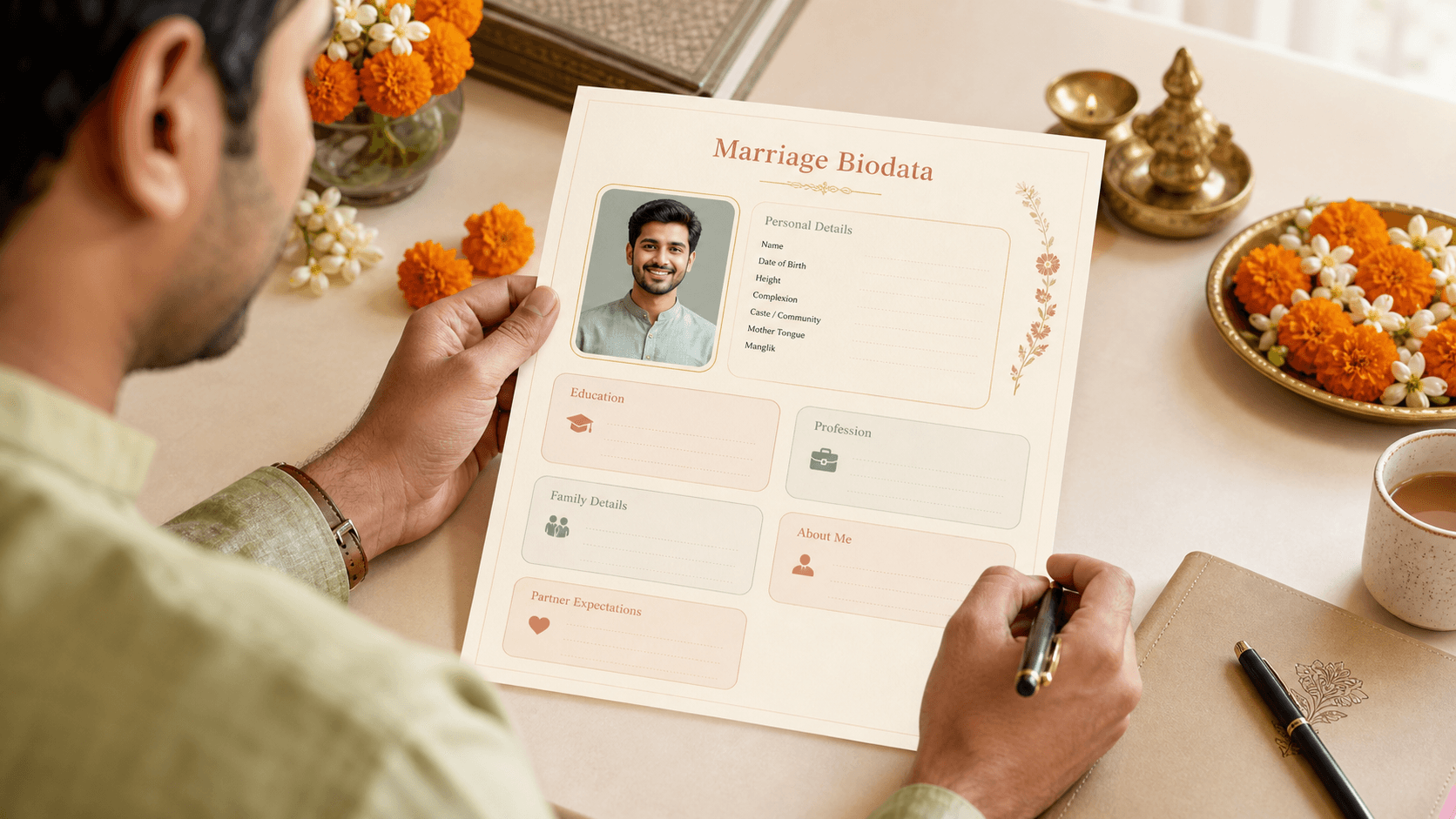
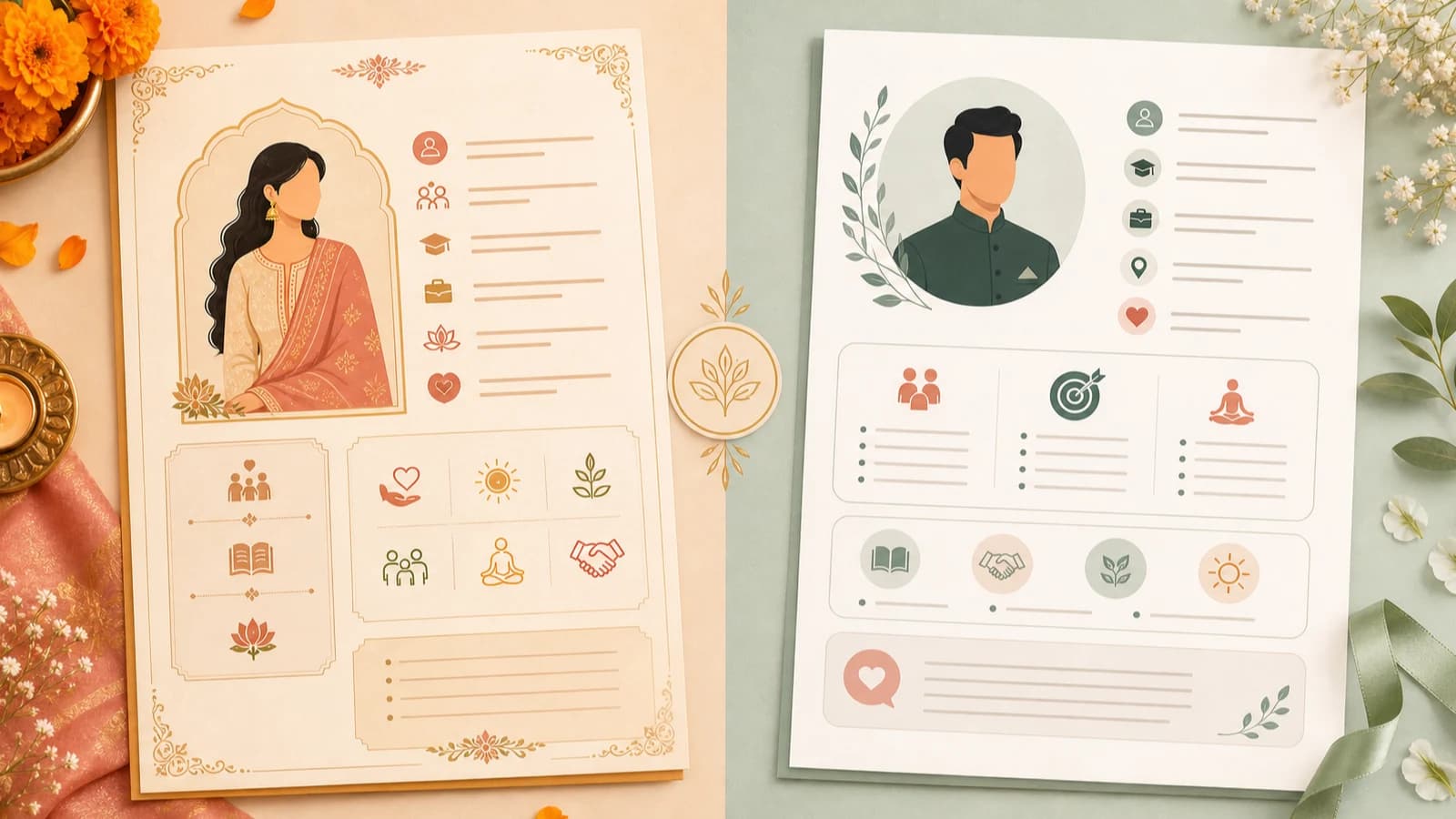
A marriage biodata usually works best as a short profile with clear headings. Consider personal details, education, work, a natural introduction, family context and a few genuine preferences. Which fields are useful depends on the individual and the way the profile will be shared.
| Section | Possible content | Editing question |
|---|---|---|
| Personal details | Name, city and age or birth information if chosen | Is each detail needed for this introduction? |
| Education and work | Qualification, profession and current location | Is this accurate and comfortable to share? |
| About me | Interests, values and everyday life | Does this sound like the person rather than a family-written résumé? |
| Family background | A brief description if desired | Has the person approved these details? |
| Preferences | Practical hopes for a future partnership | Are they respectful, clear and mutual? |
| Optional Sikh or cultural context | Terms the person wants to use | Have they confirmed the wording and level of detail? |
People and families vary in practice, language and expectations. Do not treat any religious practice, family detail, surname, location or preference as automatic. Ask the person how they describe themselves, and follow their preferred terms.
Choosing a Sikh-tagged design
VivahVerse’s biodata gallery includes Sikh-tagged designs alongside Hindu, Muslim, Jain, Christian and general options. Select a layout for readability and personal taste, then check its preview and editable content. The design can support the profile; it should not force additional fields or suggest a belief that the person has not stated.
Explore three designs from the Sikh collection and a versatile design for all communities. Choose a layout and details that feel right for the person.
 With cover
Royal Blue
Royal Sikh biodata with an Ek Onkar arch cover and Darbar Sahib detail pages.
Golden Temple
Navy and warm-gold lattice corners surround a scalloped cream reading panel, Sikh emblem and Golden Temple engraving.
Gold Border
Faceted champagne cornerwork and one fine generated perimeter frame an open reading field.
 Trending
Garden Flowers
Warm floral stationery with botanical corners and open details space for all communities.
Sunehri Darshan is one catalogue example, with a navy-and-gold frame and Sikh-inspired imagery. A design choice can make a profile feel familiar to one person and not another. Review the actual preview together and choose a different Sikh-tagged or general option if its symbols, colors or cover page do not fit.
Check names, language and family wording
Use the spelling, name form and language the person prefers. If the family wants a short introduction in Punjabi or another language, ask the person to review the wording rather than translating it automatically. Keep any description of faith or family background factual and specific; a surname, photograph or template category does not tell the reader someone’s beliefs or practice.
Write the About Me section in a direct voice. Two to four sentences about work or study, interests, values and the kind of life the person hopes to build are often enough. Avoid unsupported claims, copied phrases and private information that is not needed for an introduction.
Review and sharing
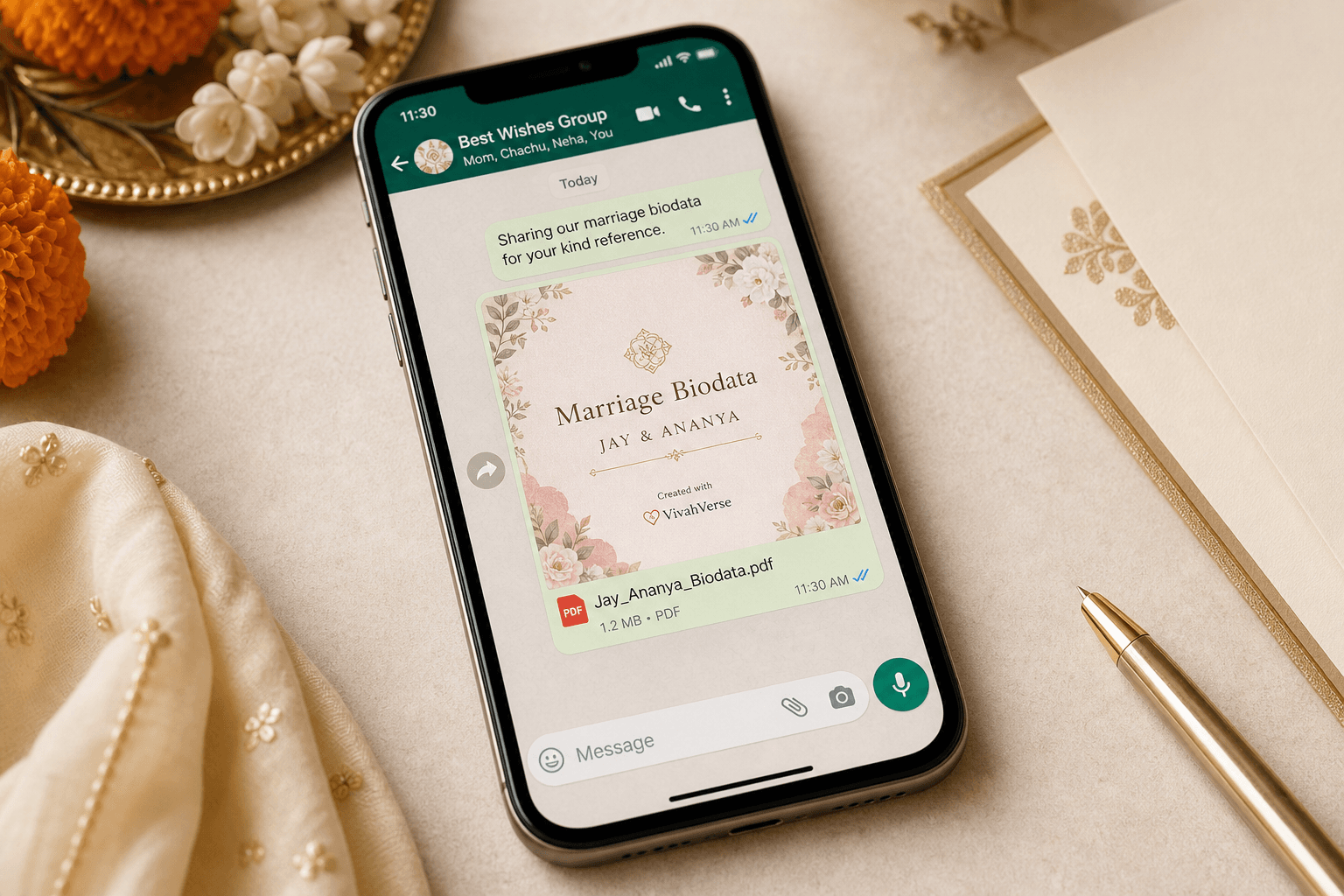
Ask the person to approve the final profile and photo. Check contact details, dates and spelling. If using a PDF on WhatsApp, remember that recipients can forward it; keep addresses, identity documents, exact income and other sensitive information out unless there is a clear reason and consent.
For more guidance, read our simple biodata format guide, traditional versus modern layouts and WhatsApp PDF guide.
- Confirm the person’s preferred wording for any faith or cultural details.
- Include only relevant education, work and family information.
- Keep the introduction specific and written in the person’s voice.
- Get consent before using the photograph or family details.
- Review the final template on a phone and correct any errors.
- Share only with the recipients the person has approved.
What is a Sikh marriage biodata format?
It is a marriage profile layout that can present personal, education, work and family information. Optional faith or cultural details should use the wording the person has chosen.
What details are required in a Sikh biodata?
There is no universal required field list. Decide with the person whose profile it is, and avoid adding details based only on a template label or assumption.
Where can I find Sikh marriage biodata templates?
Browse the VivahVerse template gallery and review Sikh-tagged layouts alongside general designs to find one that suits the content and reading style.
Find a layout that leaves room for the real profile