Muslim Marriage Biodata Format: Details and Template Guide
Prepare a Muslim marriage biodata with clear personal, education, work and family details, while keeping faith and community fields optional and personal.


Quick answer
What this guide helps with
- Prepare a respectful Muslim marriage biodata format.
- Decide which common and optional details belong in the profile.
- Choose a template without treating design elements as universal requirements.
Key takeaways
- Muslim families and individuals do not all use the same biodata format.
- Ask before including religious practice, community, family or contact details.
- Use a readable PDF and share it only with intended recipients.
Start with a clear profile
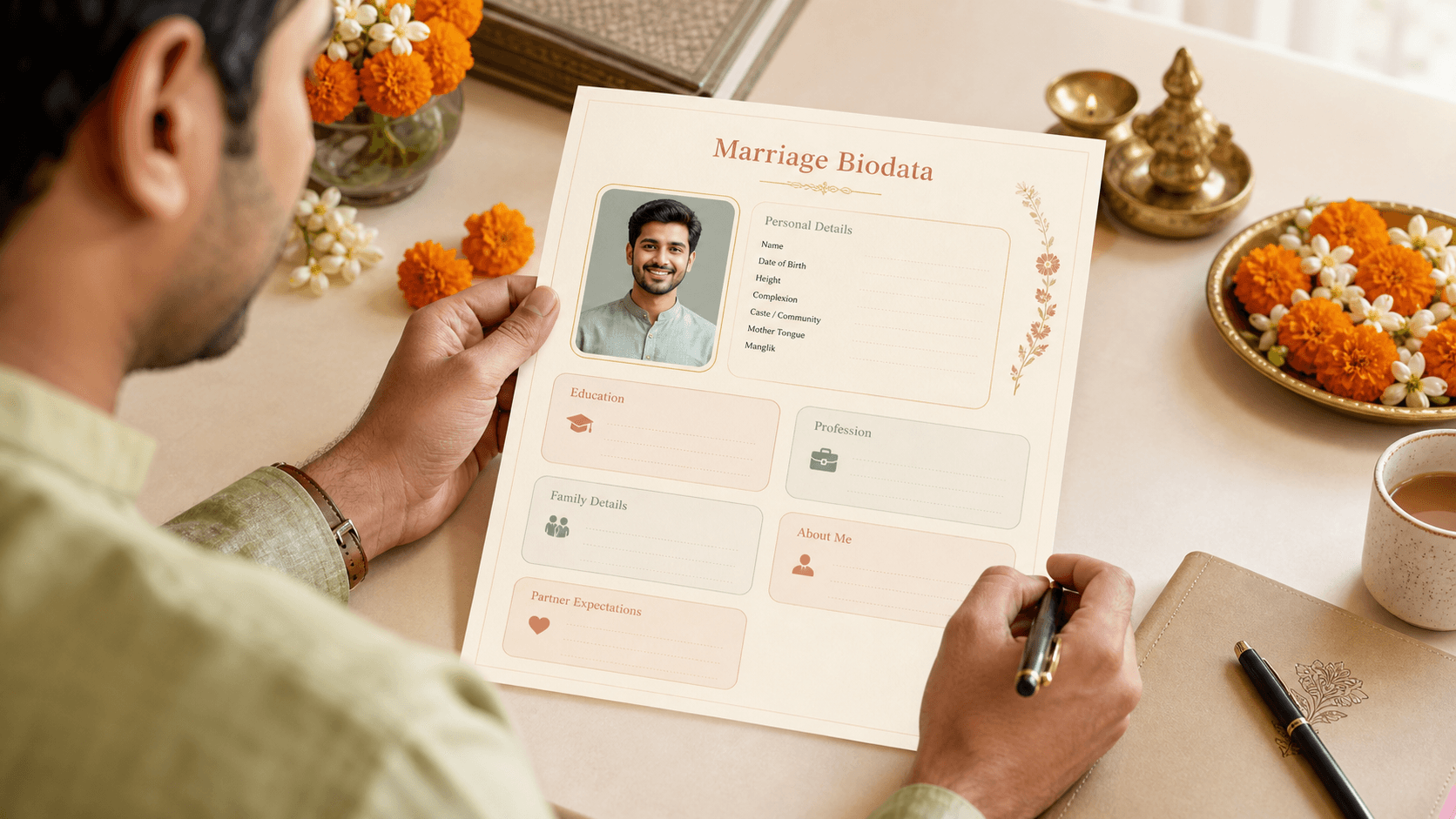
A biodata should help someone understand who the person is and what kind of introduction they are open to. Begin with accurate personal details, education and work, a few lines about the person, and a concise family overview if the person wants that included. VivahVerse’s gallery has Muslim-tagged layouts among its 50-plus marriage biodata designs; a layout is a starting point, not a rule about what every Muslim profile must contain.
| Section | What you might include | What to confirm |
|---|---|---|
| Personal profile | Name, age or birth date if chosen, city | Whether age or exact date should appear |
| Education and work | Qualification, profession, current location | What level of workplace or income detail to share |
| About me | Interests, values, routine and hopes for partnership | That the wording sounds like the person |
| Family | Brief background or location | Which relatives’ information is appropriate |
| Preferences | A few practical expectations or priorities | That language is respectful and mutual |
| Optional faith or community details | Information the person wants to mention | Which terms and level of detail they prefer |
There is no one mandatory wording for religious practice, sect, language, family structure or partner preferences. These are personal and family matters. Ask the person directly and use the language they prefer. Do not infer them from a template, name, photograph or assumed custom.
Write an introduction that sounds real
Choose a few specifics instead of a long list of adjectives. For example: current work or study, a genuine interest, what a balanced everyday life looks like and what the person values in a partnership. Keep expectations mutual and avoid phrasing that reduces either person to a checklist.
Pick a design and share it safely
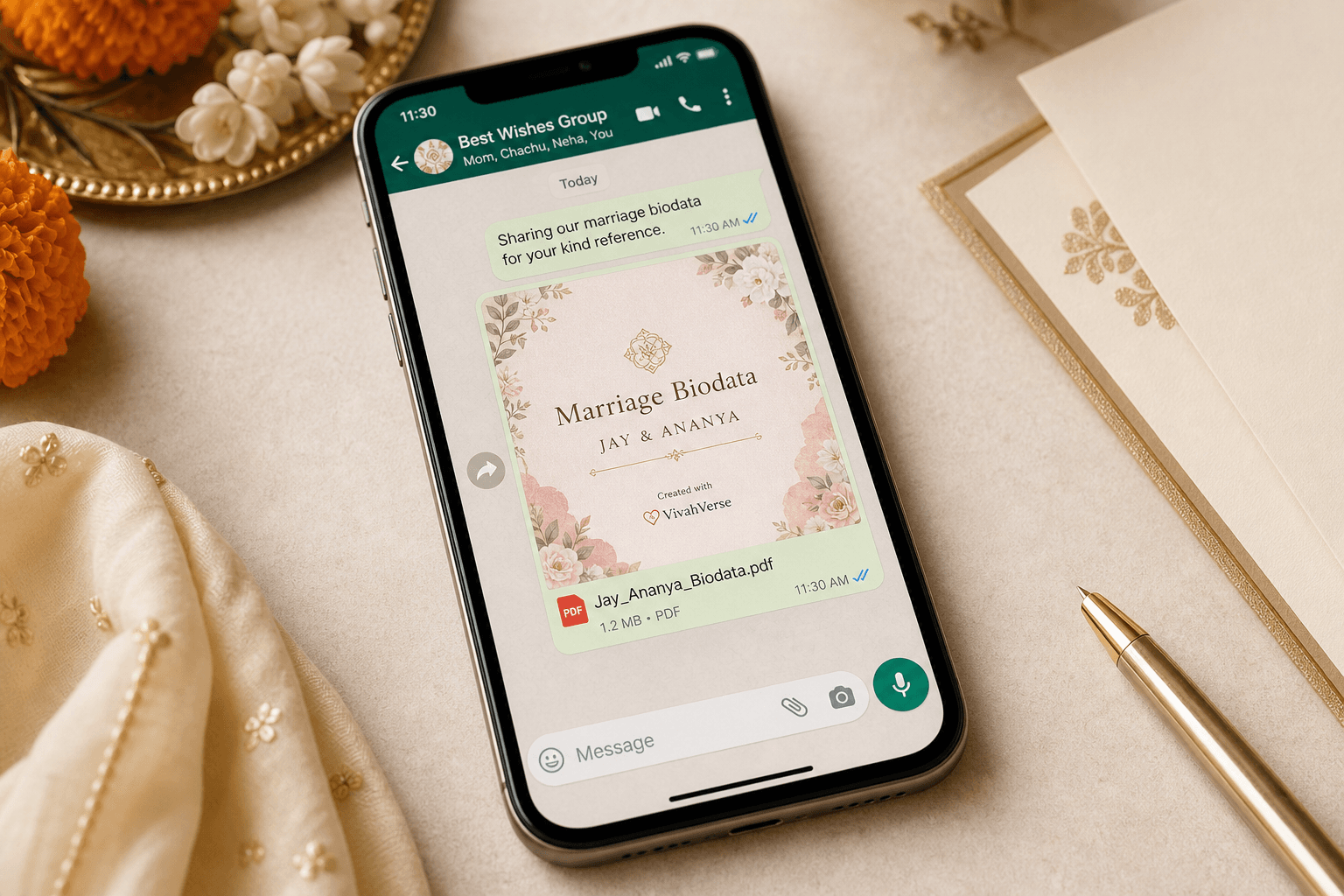
Look for clean type, clear section order and enough room for the actual details. The Muslim marriage biodata template gallery includes options to compare; review the template preview and edit any fields that do not fit. You can also read our guide to simple marriage biodata structure and sharing a biodata PDF on WhatsApp.
Explore three designs from the Muslim collection and a versatile design for all communities. Choose a layout and details that feel right for the person.
 With cover
Green Arch
Ornate emerald and antique-gold frame with a grand Islamic arch.
Blue Corners
Turquoise paper-relief corners balance an open asymmetric identity header.
Purple Leaves
Violet botanical corners and a fine outline surround a compact portrait biodata with a crescent header.
 Trending
Garden Flowers
Warm floral stationery with botanical corners and open details space for all communities.
One current catalogue example, Noor Fanoos, uses a cream-and-charcoal palette, lattice detail, lantern artwork and calligraphy. That describes the design only; it does not say what a person believes or how they practise. If the visual style does not feel representative, choose another Muslim-tagged or general layout.
Put personal and family preferences in the person’s words
If a profile mentions faith practice, language, family involvement or expectations, ask the person which detail they want to share and how they would explain it. A short, specific sentence can prevent assumptions better than a broad label. Avoid adding a sect, observance, contact person or family role because a sample biodata included it.
Before sharing, check every detail with the person, get consent for the photo and family information, and remove anything unnecessary for a first introduction. A PDF can be forwarded, so consider using a contact channel that the person has approved instead of publishing private numbers or addresses.
- Ask the person which personal and faith details they wish to share.
- Use a short introduction written in their voice.
- Check names, education, profession, dates and spelling.
- Get permission for photos and family details.
- Review the PDF on mobile and remove details that are not needed.
- Send it only to the people or groups the person has approved.
What should a Muslim marriage biodata include?
A practical profile may include personal details, education, work, a short introduction and family information. Religious practice or community details are optional and should reflect the person’s own preference.
Is there one standard Muslim biodata format?
No. Individuals and families differ. Use a format that presents the person clearly and confirm any community-specific fields directly rather than treating them as universal.
Can I make a Muslim marriage biodata PDF online?
VivahVerse offers editable biodata templates, including Muslim-tagged designs. Review the fields, enter only approved information and check the PDF before sharing.
Compare editable biodata layouts