How to Write an Impressive About Me in Your Marriage Biodata
A practical framework for writing a marriage biodata introduction that sounds warm, clear, and family-friendly without reading like a resume.
Quick answer
What this guide helps with
- Write an About Me section that feels warm and believable.
- Understand what families usually look for in a biodata introduction.
- Avoid resume-like language that reduces trust or readability.
Marriage biodata About Me section
This is the short personal introduction that helps families understand your personality, values, lifestyle, and communication style before they read the rest of the biodata.
Key takeaways
- Clarity beats dramatic language.
- Short spoken sentences work better than polished corporate wording.
- Specific signals about lifestyle and values feel more trustworthy than generic praise.
Start with clarity, not decoration
Your biodata introduction does not need dramatic language. It should sound natural, respectful, and easy to trust.
- State who you are in a calm, direct way.
- Mention your work or current focus without turning it into a CV.
- Include a few personality signals such as grounded, family-oriented, curious, or creative.
- Keep the tone warm and readable for both you and your family audience.
A simple structure that works
Include these essentials
Who you are, what you do, how you live, and what kind of values matter to you.
Think in short spoken sentences, not achievement bullets.
Avoid these mistakes
Overly generic claims, forced self-praise, and long paragraphs full of formal corporate wording.
The goal is clarity and comfort, not branding.
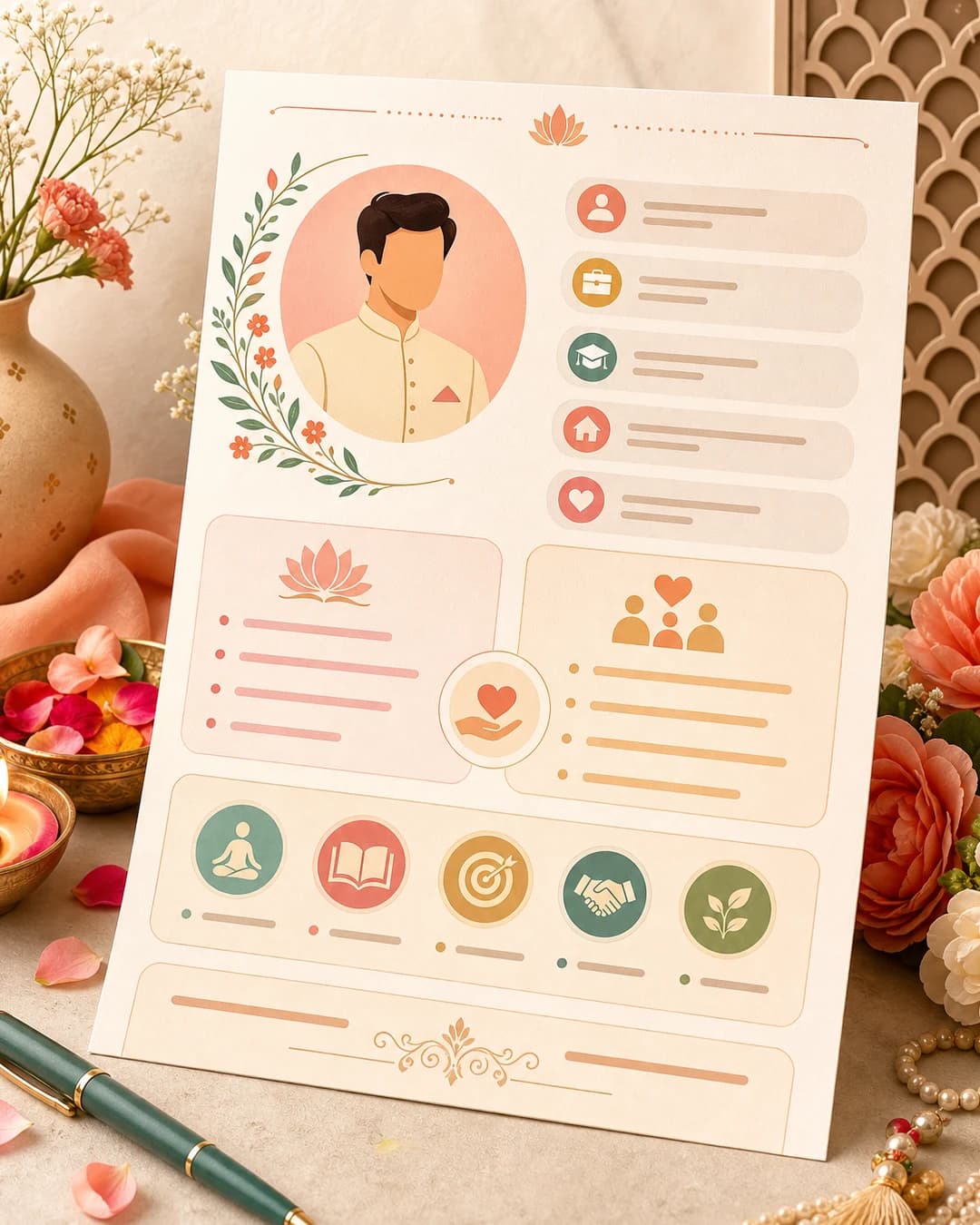
What this visual is showing
The strongest biodata introductions usually sit inside a layout that feels calm, scannable, and structured. Families should be able to understand your personality cues without getting lost in long paragraphs or formal filler.
This is why content and presentation should support each other. A warm introduction becomes more believable when the surrounding biodata layout also feels thoughtful and easy to read.
A working formula
Use this formula:
Present role or life stage -> personality snapshot -> family and lifestyle values -> future outlook
Example flow:
Example
I work in software and enjoy building thoughtful things, but outside work I am fairly grounded and family-oriented. I value honesty, consistency, and respectful communication, and I prefer a balanced lifestyle that makes space for both ambition and close relationships.
Keep it readable for families
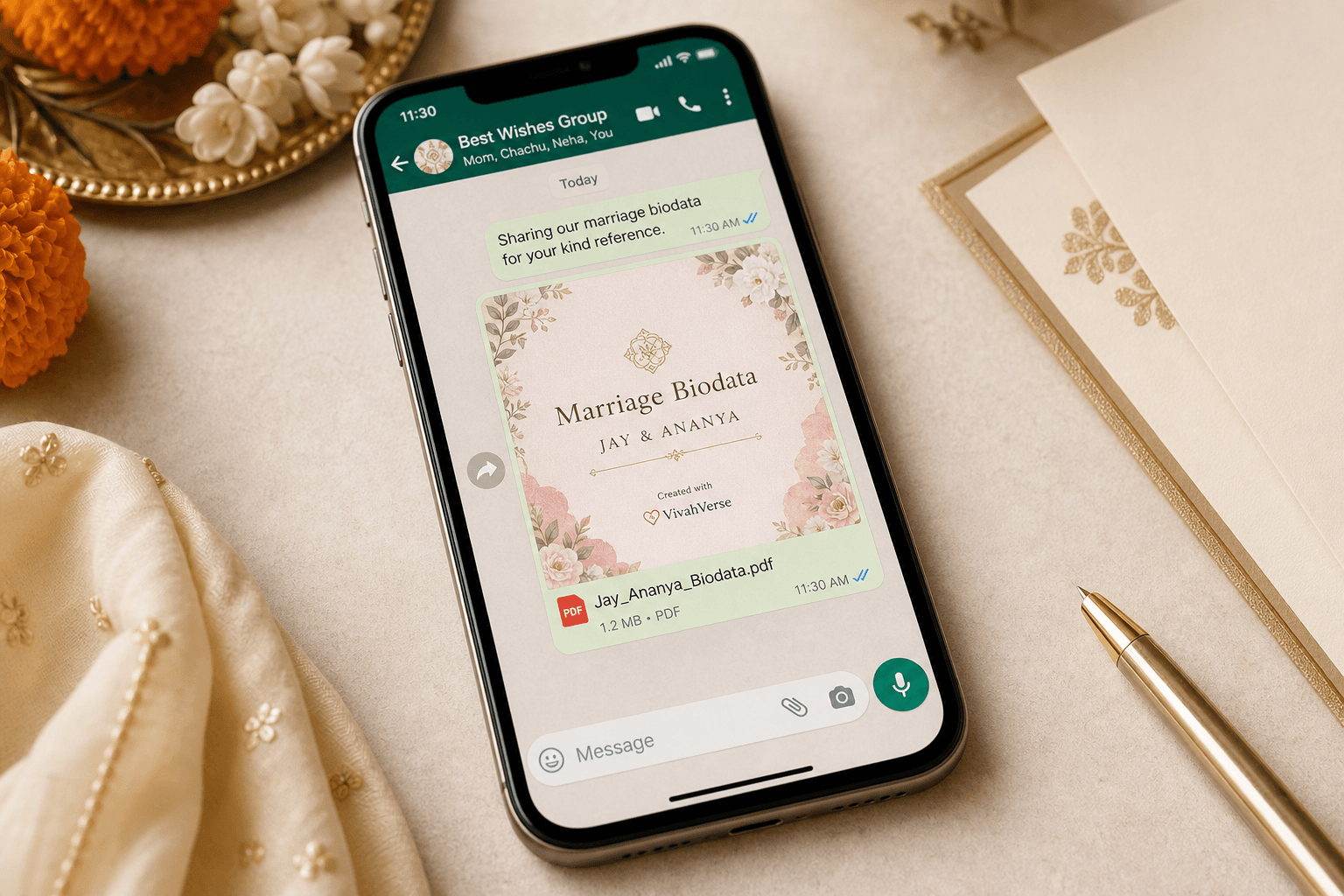
Many biodatas are shared across WhatsApp, PDFs, and screenshots. That means readability matters as much as wording.
Short paragraphs
Plain language
Specific signals
When traditional families are involved
If your biodata will be reviewed by older family members first, aim for respectful simplicity rather than casual social-media tone.
Useful framing
You do not need to sound old-fashioned. You only need to sound stable, clear, and genuine.
Common mistakes
Writing only one vague sentence
Readers do not get enough context to understand your personality or communication style.
Using resume or LinkedIn language
It makes the biodata feel formal and distant instead of warm and family-friendly.
Overusing flattering adjectives
Generic self-praise reduces trust and makes the section feel copied.
Final self-check before sharing
- Does it sound like a real person and not a template?
- Would your parents be comfortable forwarding it?
- Can someone understand your personality in one reading?
- Is the section still easy to read on a phone screen?
When to use the tool
Turn your draft into a polished biodata