Jain Marriage Biodata Format: Details and Template Guide
Plan a Jain marriage biodata with useful profile sections, optional community details chosen by the person, and a template that stays clear and private.


Quick answer
What this guide helps with
- Build a respectful Jain marriage biodata profile.
- Decide which details are useful and which should remain optional.
- Choose a readable Jain-tagged or general template and share it with consent.
Key takeaways
- Do not assume food, practice or family preferences from the word Jain.
- Ask the individual what cultural context they want to share.
- Keep private information to the minimum needed for an introduction.
A flexible Jain biodata structure
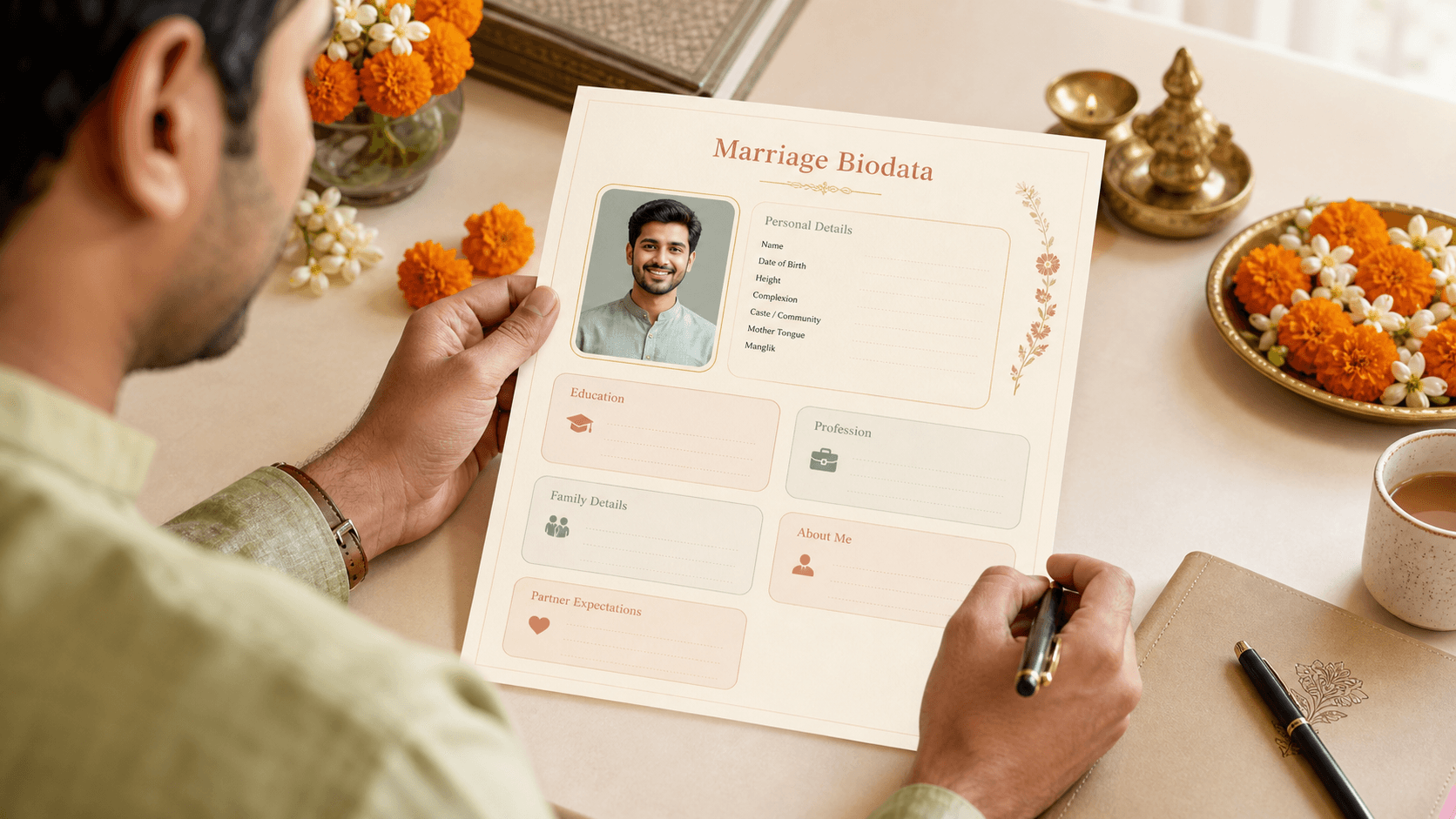
There is no single format that represents every Jain person or family. A concise biodata can begin with personal information the individual chooses to share, followed by education and work, a short About Me section and a brief family introduction. Add further details only when they serve the person and the intended conversation.
| Section | Example fields to consider | Keep it personal by… |
|---|---|---|
| Personal profile | Name, city, age or birth details if chosen | Avoid publishing more identifying information than needed |
| Education and work | Qualification, role or profession | Use accurate, simple language |
| About me | Interests, values, routine and aspirations | Mention real details rather than generic adjectives |
| Family context | Short background if the person wants it | Ask before adding relatives’ names or occupations |
| Preferences | A small number of partnership priorities | Use mutual, respectful wording |
| Optional community details | Terms or context the person chooses | Do not infer practice, diet or observance |
Jain communities are diverse. Do not assume diet, religious observance, family structure, language, location or expectations. If any of these details matter to the person, invite them to describe what they want included and how they want it phrased.
Choose a template, then edit the content
VivahVerse’s marriage biodata template gallery includes Jain-tagged layouts and broader designs. Look at type size, contrast, photo placement and how easily a reader can scan the information. A community tag is a design filter, not a required field list. Remove sections that do not fit and add only details the person approves.
Explore three designs from the Jain collection and a versatile design for all communities. Choose a layout and details that feel right for the person.
Orange Flowers
Warm peach stationery with a continuous marigold toran, slim ceremonial borders and rust section tabs.
Lotus Mandala
A serene Jain-inspired layout with floral linework and a soft mandala wash.
Green Garland
Sage brocade and a carved golden arch with hanging garlands frame a central circular portrait and spacious details.
 Trending
Garden Flowers
Warm floral stationery with botanical corners and open details space for all communities.
Jain Lotus Mandala is one actual catalogue option, with floral linework and a soft mandala wash. It is an aesthetic example rather than a claim that one motif or format represents all Jain families. Check the preview, page length and field spacing against the profile you are preparing.
Describe lifestyle preferences precisely
If food, observance, daily routine or family expectations matter to the person’s introduction, let them say what they mean in their own words. Avoid using a broad label as a substitute for an individual preference. For example, if someone wants to mention a dietary preference, confirm whether they want a specific description at all and keep it separate from assumptions about everyone in a community.
Write the introduction in a warm, first-person voice. A few lines on what the person does, enjoys and values can be more helpful than a long family-written description. Avoid labels such as “ideal” or “perfect” and describe what matters in a partnership in concrete terms.
Privacy before sending a PDF
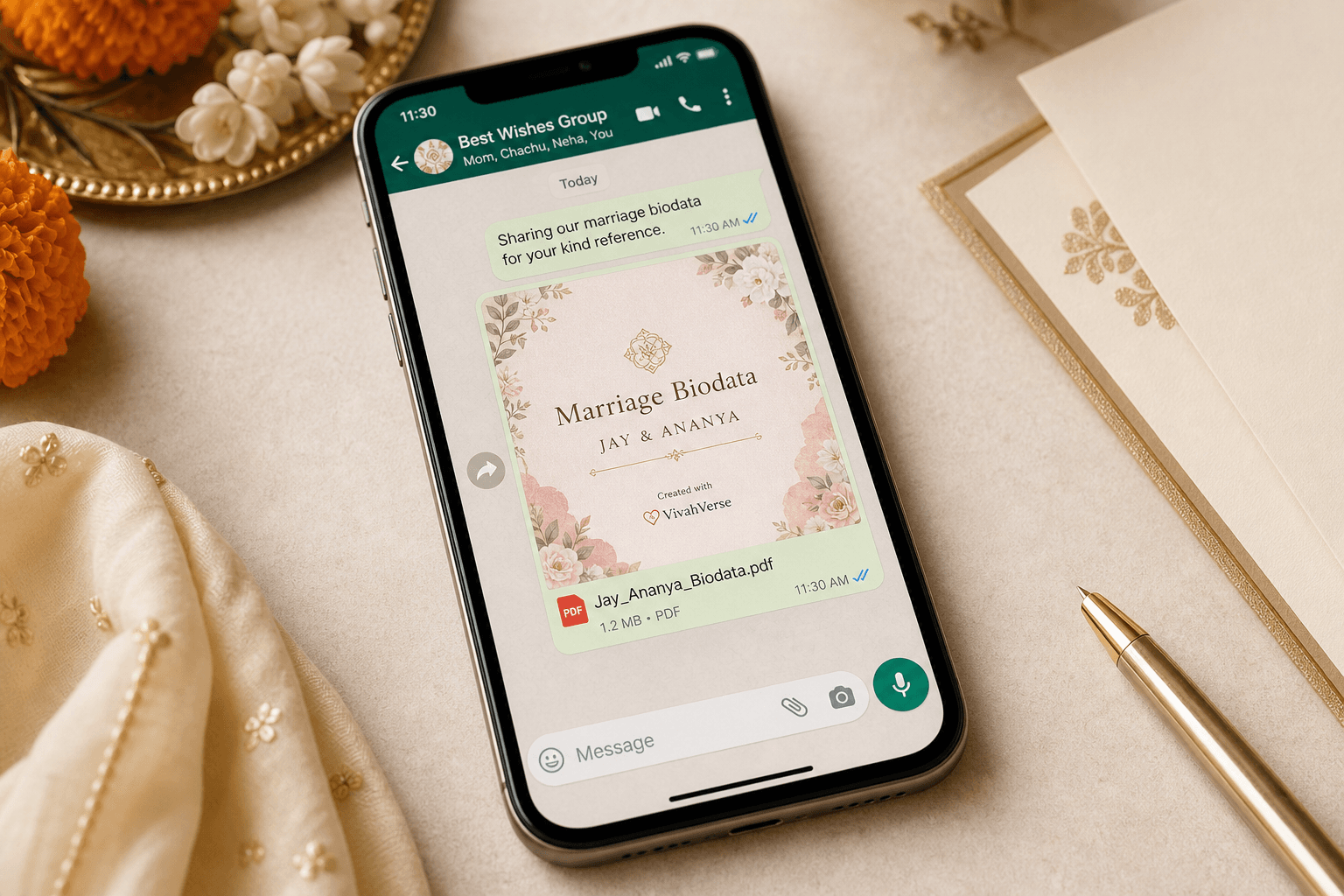
Check every field and image with the profile owner. A biodata shared through a chat can be forwarded, so avoid attaching identity documents, home addresses, exact income or personal contact details unless they are needed and the person consents. Review the PDF on a phone; confirm that no text is cut off and that the photo is current.
For related help, see our guides to simple marriage biodata formats, writing an About Me section and sharing a biodata PDF safely.
- Ask which personal and community details the person wants to include.
- Do not assume diet, observance, language or family preferences.
- Write a brief introduction using the person’s own voice.
- Check the photograph, dates, spelling and export on mobile.
- Remove unnecessary sensitive information before sharing.
- Send the biodata only to the intended recipients.
What should a Jain marriage biodata include?
A practical profile can include personal details, education, work, an introduction and family background. Community or lifestyle details are optional and should come from the person.
Is there a standard Jain biodata template?
No single template applies to every Jain person or family. Choose a layout for readability and edit it to match the individual’s approved information.
Can I use a general biodata design instead?
Yes. A general template can work well if it presents the profile clearly and contains the fields the person wants to share.
Compare Jain-tagged and general layouts