Hindu Marriage Biodata Format: Details, Fields and Templates
Learn what to include in a Hindu marriage biodata, which cultural and horoscope details are optional, and how to choose and share a readable template.


Quick answer
What this guide helps with
- Understand what to include in a Hindu marriage biodata.
- Separate practical profile details from optional cultural or horoscope fields.
- Choose a readable template and protect personal information when sharing a PDF.
Key takeaways
- There is no single Hindu biodata format that every family must follow.
- Confirm optional fields directly with the person whose profile it is.
- A clear, accurate and respectful profile is more useful than a crowded page.
A practical Hindu marriage biodata format
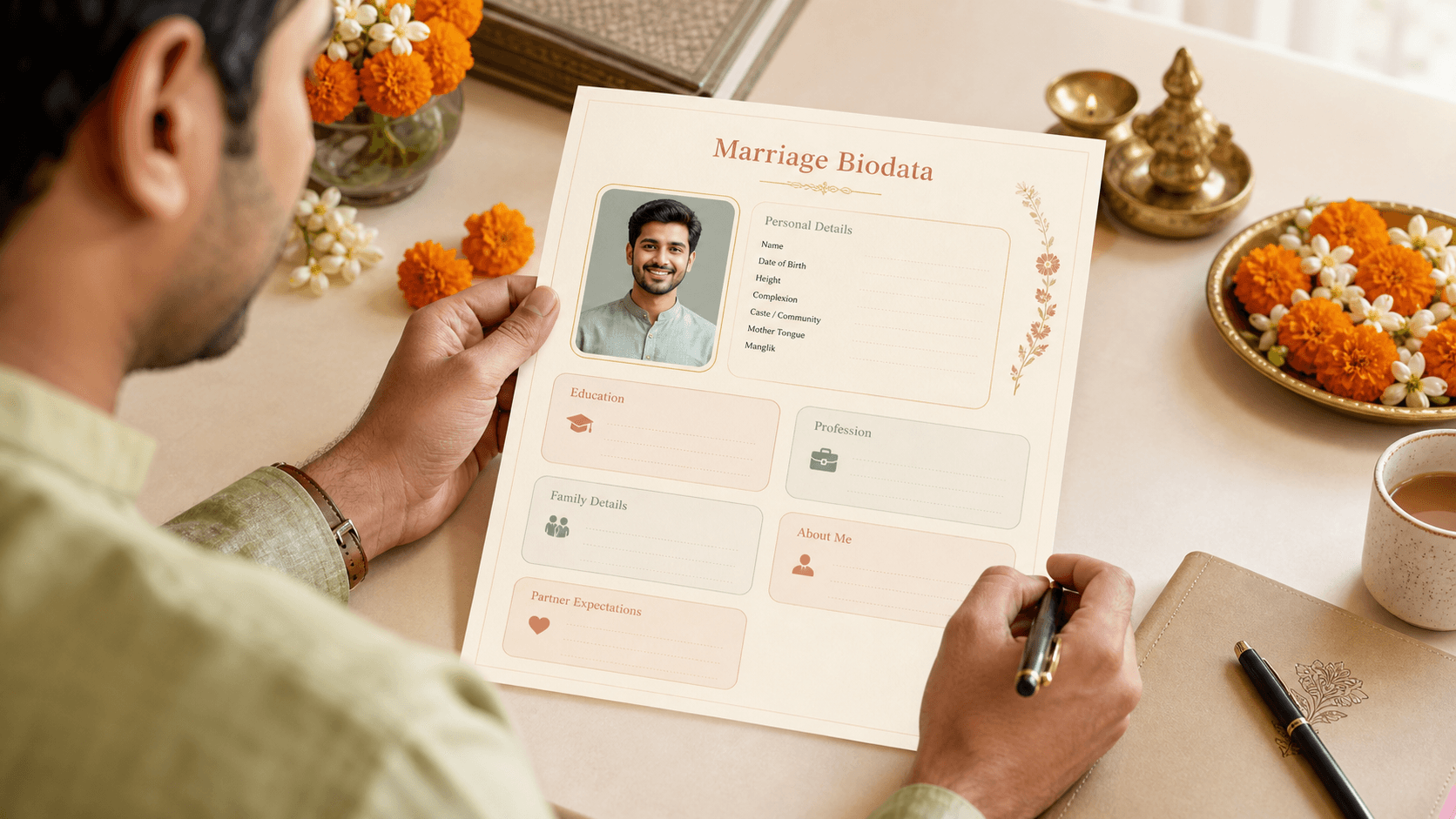
Marriage biodata is a brief introduction, not a complete record of someone’s life. A useful format helps a reader understand the person’s current situation and what they want to share. VivahVerse’s template catalogue includes more than 50 layouts and Hindu-tagged options, but the content should be decided by the person, not inferred from a design.
| Section | Common details to consider | Keep in mind |
|---|---|---|
| Introduction | Name, age or date of birth if chosen, current city | Share only what is useful and accurate |
| Education and work | Qualification, role or profession, work location | Avoid unnecessary employer or income detail |
| Family | Short background and family location | Keep relatives’ details brief and consensual |
| About me | Interests, values, routine or what you hope to build | Use natural language, not a list of claims |
| Match preferences | A few genuine priorities, if the person wants them included | Avoid rigid or discriminatory wording |
| Optional cultural details | Horoscope, language, community or other requested details | Include only after confirming the person wants them shared |
Some families request horoscope details such as birth date, time and place or a chart. These are optional profile choices, not universal requirements. Ask the person whose biodata is being prepared before including information that can identify them or reveal sensitive personal details.
Writing a short “About me” section
Use three or four specific sentences: what you do, how you spend time outside work, one value important to you and what kind of partnership you hope to build. Keep the voice personal. Do not describe someone as “perfect,” claim to speak for their whole family, or copy a generic biography that could belong to anyone.
Choosing a template
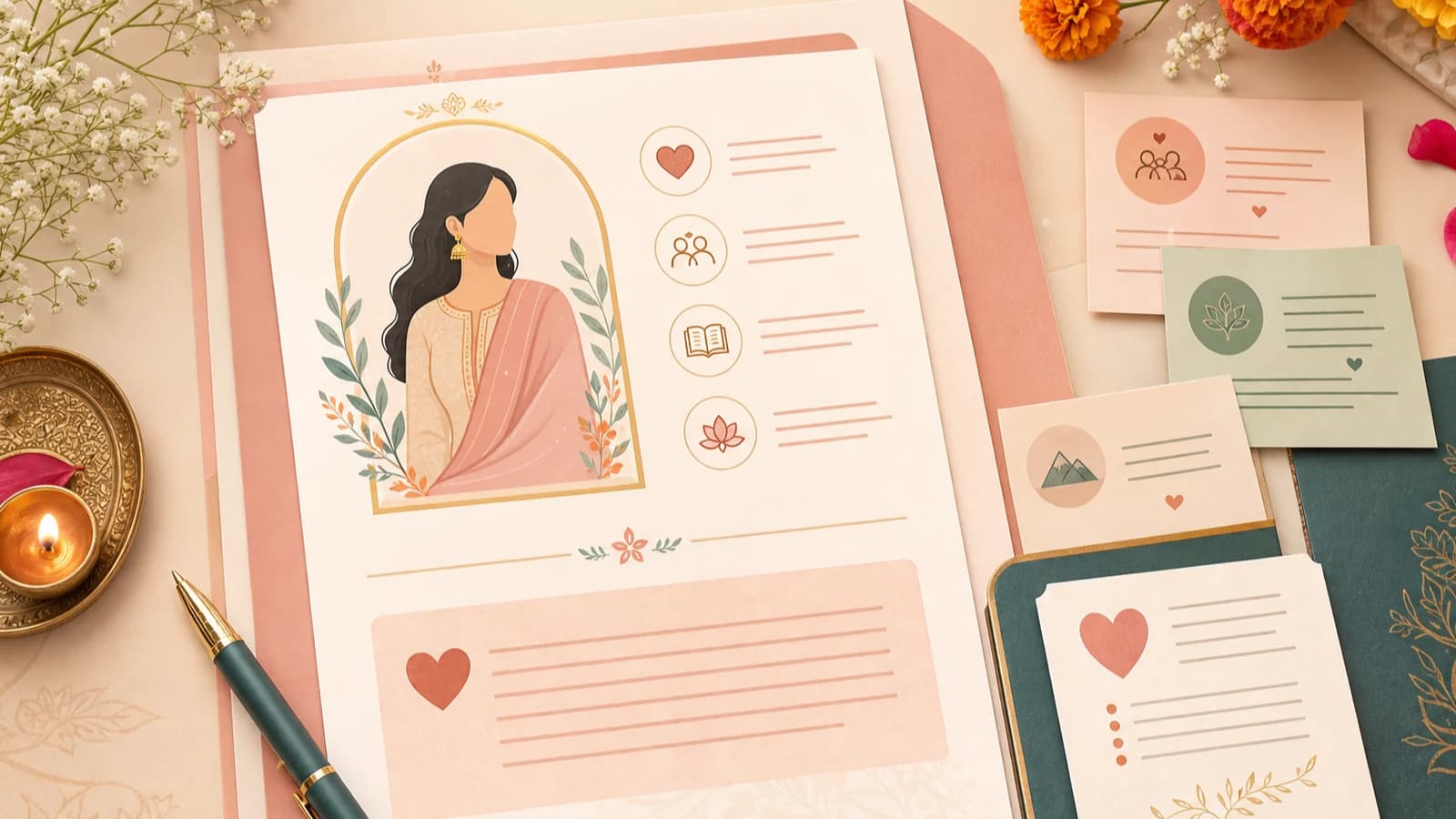
Choose a Hindu-tagged design if its visual details feel appropriate, then check that the actual fields are editable and readable. Templates are a presentation choice; they do not define beliefs, practices or what a family must disclose. Browse the marriage biodata templates and compare with our guides to simple biodata formats, traditional and modern layouts and writing an About Me section.
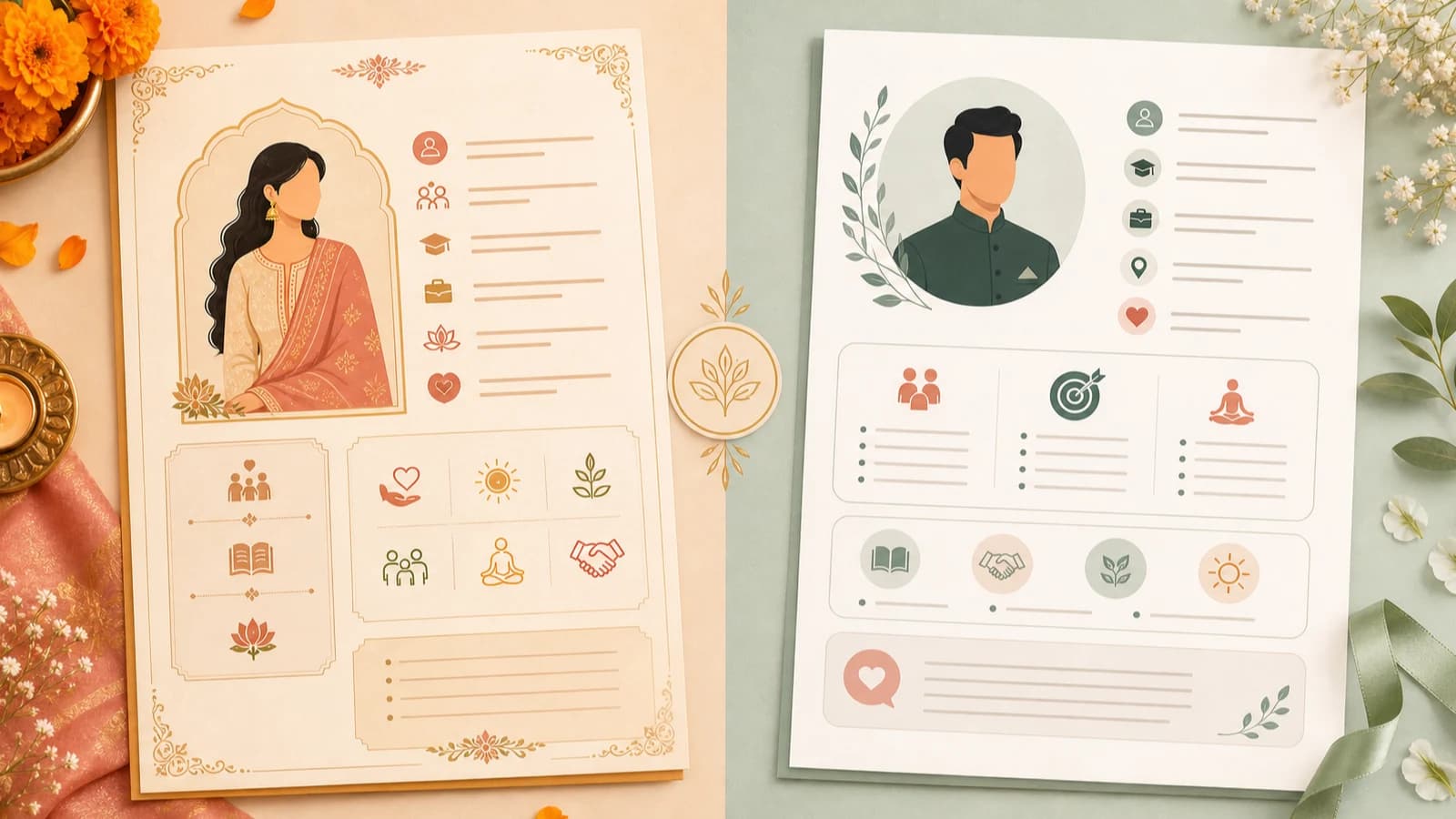
Explore three designs from the Hindu collection and a versatile design for all communities. Choose a layout and details that feel right for the person.
 With cover
Red Frame
A maroon and gold mandala cover with a rectangular portrait, paired with restrained ivory details pages.
 TrendingWith cover
Golden Ganesha
Decorative floral accents while preserving safe content density.
 With cover
Red Ganesha
Traditional heritage look with clear profile and premium spacing.
 Trending
Garden Flowers
Warm floral stationery with botanical corners and open details space for all communities.
The catalogue’s Reference Thirty Five design is one example: it has a coordinated cover and details page, with a birth summary in the cover layout. If you do not want those fields, choose a no-cover design or remove optional information where the editor allows it. A visual association with a tradition should never make a private detail feel compulsory.
Should horoscope details appear?
Some people choose to include birth date, time, place or a chart because those details are part of the introductions they are having. Others leave them out. Decide with the person, check the spelling and accuracy, and avoid sharing exact birth information publicly. If the family wants to exchange a chart separately, the biodata does not need to carry the underlying personal details too.
Review before you share
Check names, dates, spelling and contact information with the person. Ask permission before adding family details or a photograph. Share the PDF only with the intended recipients; avoid posting addresses, identity documents, exact income, private phone numbers or birth details publicly. If preferences change, edit the source and generate a fresh copy rather than circulating an outdated file.
- Confirm each field with the person whose biodata it is.
- Mark optional cultural or horoscope information as optional, not assumed.
- Use a current photo only with clear consent.
- Keep About Me concise, specific and written in the person’s voice.
- Check the exported PDF on a phone before sending it.
- Share through a trusted channel and remove unnecessary sensitive details.
What is included in a Hindu marriage biodata?
Common sections include personal details, education, work, a short introduction and family background. Horoscope and other cultural fields are optional and should be included only if the person wants them shared.
Is horoscope information compulsory in a Hindu biodata?
No single template or field list applies to everyone. Ask the person and family what, if anything, they want included; do not infer it from religion or a template design.
Where can I find a Hindu marriage biodata template?
Browse VivahVerse’s biodata template gallery and filter or select a Hindu-tagged design, then review its editable fields before creating the PDF.
Choose a format that fits the person