Marriage Readiness Before the Wedding: What It Means and Why It Matters
A practical guide to marriage readiness before the wedding, including the conversations, values, responsibilities, and expectations worth reflecting on before marriage.

Quick answer
What this guide helps with
- Understand what marriage readiness means beyond age, income, or a wedding date.
- Identify the personal and shared areas worth reflecting on before marriage.
- Start thoughtful conversations without treating your relationship like an interview.
Marriage readiness
Marriage readiness is the ability to approach a long-term partnership with self-awareness, honest communication, practical responsibility, and room for each person to grow. It is a reflection process, not a prediction about whether a marriage will succeed.
Key takeaways
- Readiness is more useful as a set of conversations than as a single score.
- A shared future needs clarity about everyday life, not only wedding plans.
- Questions about money, family, work, conflict, and care are preparation, not pessimism.
Why marriage readiness matters before the wedding
Planning a wedding naturally brings up dates, guest lists, outfits, venues, and family expectations. Those details matter. But a wedding is one event, while marriage is the everyday partnership that begins after it.
Marriage readiness creates a little space before the momentum of planning takes over. It helps you notice what feels steady, where you need more information, and which topics deserve a calmer conversation. That can be useful whether you are in a long relationship, newly engaged, or getting to know someone through an arranged-marriage process.
What readiness is not
It is not a way to judge a partner, prove that someone is good enough, or reduce a complex relationship to a checklist. A thoughtful reflection should leave room for context, change, and follow-up conversations.
What it can do
It can make vague hopes more specific. Instead of saying "we will figure it out," you can begin naming what support, responsibility, home, family involvement, and partnership look like to each person.
The areas to reflect on before marriage
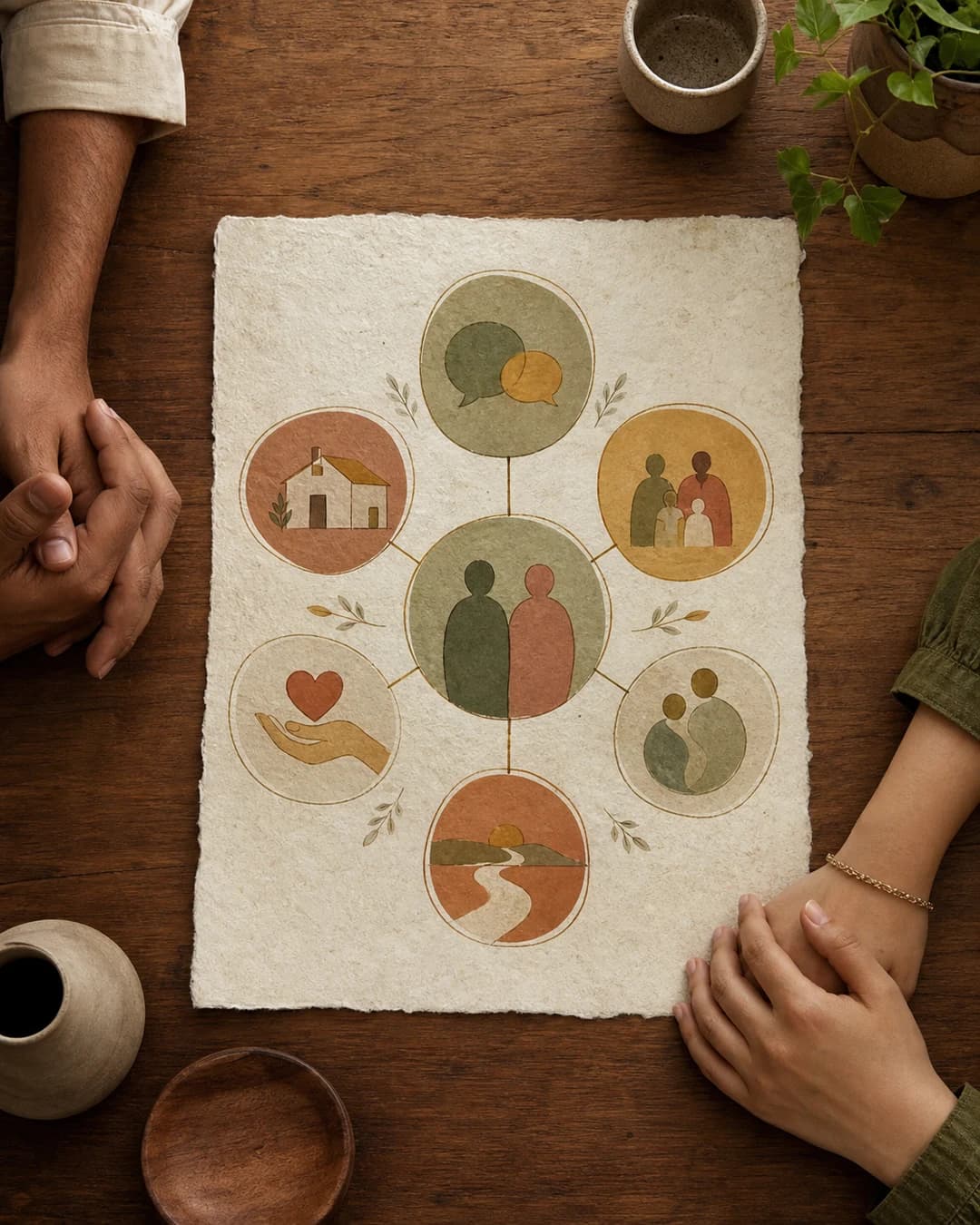
There is no universal script, but a useful marriage readiness conversation usually includes both emotional and practical life.
How to start without making it an interview
The best questions are not a one-night examination. Choose one topic at a time, answer it yourself as openly as you ask it, and give the other person room to think.
Begin with yourself
Use real examples
Return to the topic
A gentle boundary
If a conversation reveals fear, pressure, repeated disrespect, or a situation where either person does not feel safe, pause the decision and seek support from someone qualified and trusted. A reflection tool is not a substitute for professional mental-health, legal, or safety advice.
Signs the reflection is helping
- You can name a topic that needs more time without seeing that as failure.
- You are moving from assumptions to examples and requests.
- Both people are allowed to answer honestly, even when answers are not identical.
- The conversation leaves you with a clearer next step, not a verdict.
Common mistakes
Treating readiness as a score to beat
It can turn reflection into performance and hide the very areas that deserve care.
Only discussing wedding logistics
A beautifully planned celebration does not automatically answer how daily partnership will work.
Using questions to pressure someone into an answer
Clarity requires consent, time, and enough emotional safety for each person to be truthful.
What does being ready for marriage mean?
Being ready for marriage means being willing to reflect honestly on commitment, communication, responsibility, expectations, and the future. It does not mean being flawless or having every detail decided.
How do I know if I am emotionally ready for marriage?
Start by noticing how you handle feelings, conflict, repair, responsibility, and uncertainty. A private reflection can identify what feels steady and what deserves more attention or support.
What should couples discuss before marriage in India?
Couples can discuss values, money, work, home, children, family involvement, faith or culture, communication, conflict, care responsibilities, and personal boundaries. The details should fit the people and families involved.
Begin with a private reflection