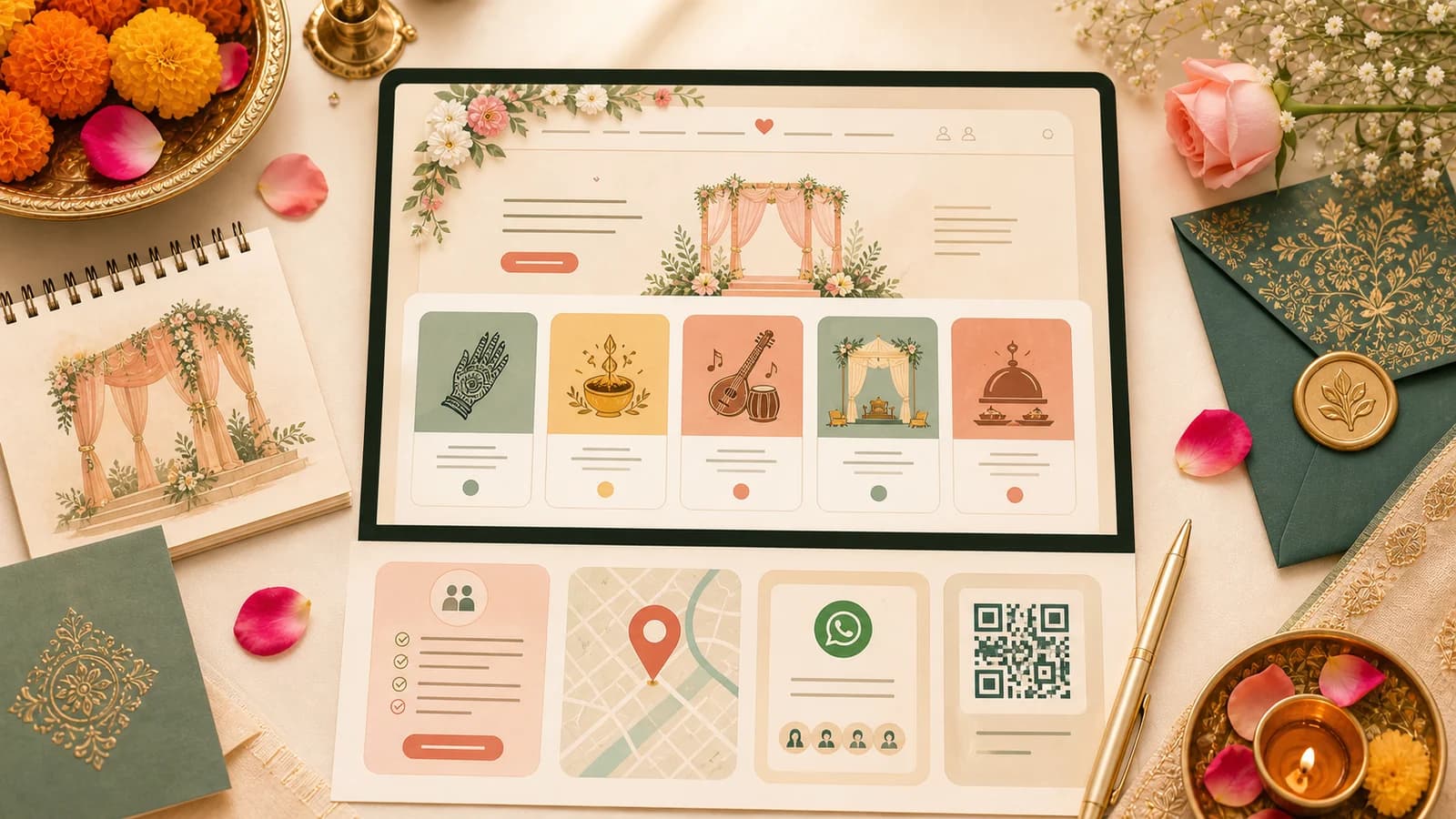
3-Day Indian Destination Wedding Itinerary
Adapt this three-day Indian destination wedding itinerary for guest arrivals, welcome events, ceremony timing, meals, transfers and rest.

Photo: Imakanksha · CC BY-SA 4.0
Quick answer
What this guide helps with
- See a sample three-day schedule guests can understand.
- Leave buffers between functions and venue transfers.
- Publish confirmed times and locations in one guest-facing itinerary.
No single schedule suits every ceremony or family. This outline is a planning aid, not a required sequence. If your celebration has more or fewer functions, keep the guest-facing page focused on what guests need to know and when.
Flexible three-day example
Day 1: Arrivals and welcome
- Afternoon: Guest check-in and a clearly marked help desk or contact.
- Early evening: Optional welcome gathering with a stated start and finish window.
- Evening: Dinner and a short next-day reminder; avoid making guests guess whether attendance is expected.
Day 2: Main celebration
- Morning: Breakfast and preparation time. Keep optional activities separate from required event times.
- Afternoon: A rest and transition window. If guests must travel between venues, include the pickup point and realistic buffer.
- Evening: Main ceremony and reception, with separate locations and local start times if needed.
Day 3: Farewell and departure
- Morning: Farewell meal or check-out instructions, with any luggage storage details confirmed by the property.
- Through the day: Share transfer contacts and let guests know whether rides run on fixed windows or individual bookings.
Make the plan work in real life
Ask the venue how long setup, photography, family rituals and room changes take. Allow time for guests to arrive and find the right area. If there are several event locations, identify the driver or organizer who can keep transitions moving. Build a weather or indoor adjustment plan only when the venue has confirmed it.
- Use one time zone and format consistently.
- Give every event a location, map link and arrival note.
- Label events as optional, hosted or limited to invited guests where relevant.
- Include meal, dress and mobility details guests need to prepare.
- Leave a buffer around transfers and avoid back-to-back venue changes.
- Add an update contact and a last-updated date for the schedule.
For guest logistics, use the destination travel checklist. For ceremony-specific event cards, see the Indian wedding website checklist.
How many events should the itinerary include?
Include every event guests are expected or invited to attend, plus arrival or departure instructions that affect their plans. Label optional activities clearly.
Should we publish a draft schedule?
Share confirmed information first. If you need an early page, label unconfirmed details as pending and avoid asking guests to book around guessed times.
How much time should we leave between venues?
Ask the venue and transport provider for a realistic estimate at the event time, then add a buffer for loading, parking and guest movement.
Share the schedule guests can rely on