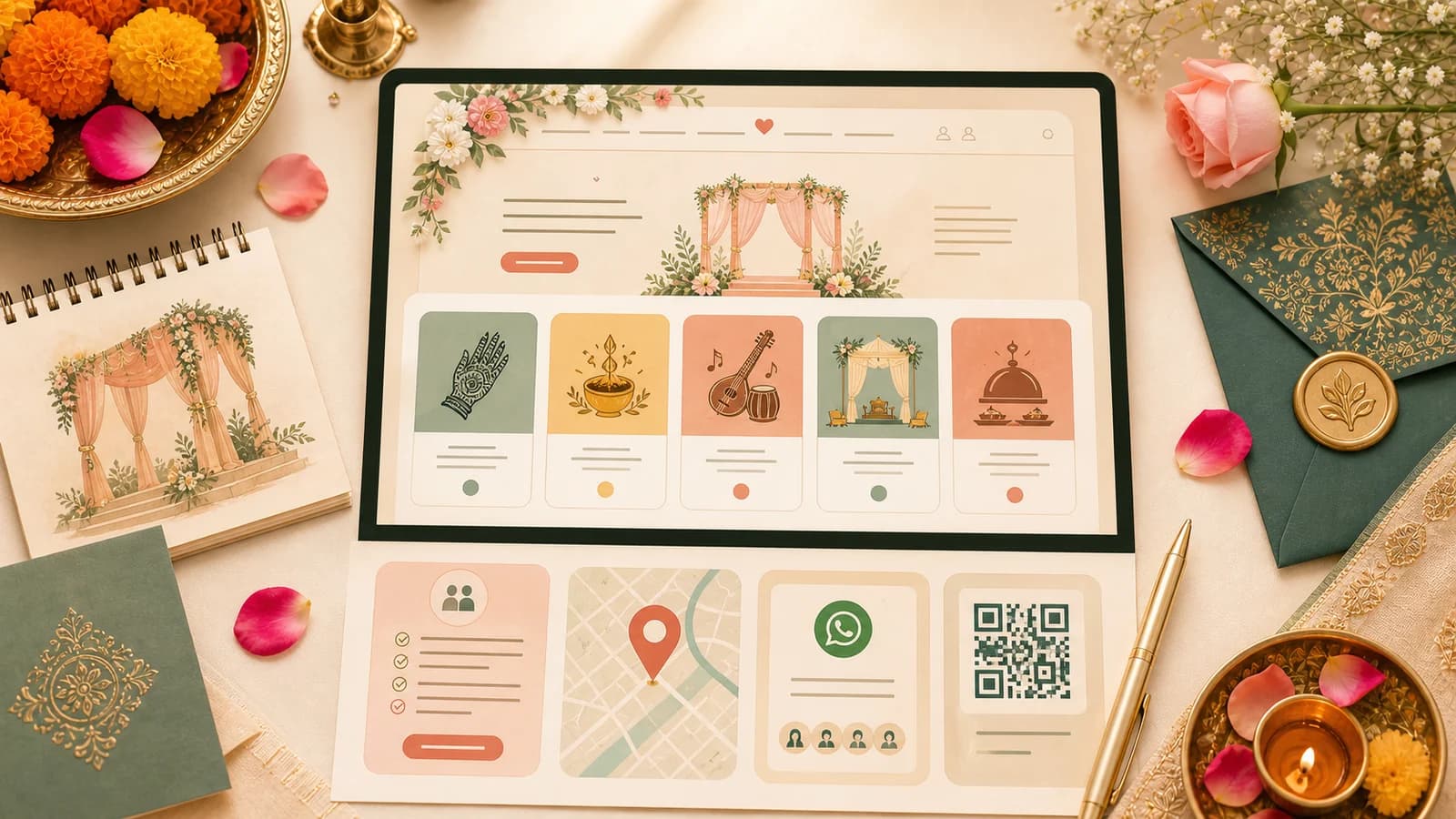
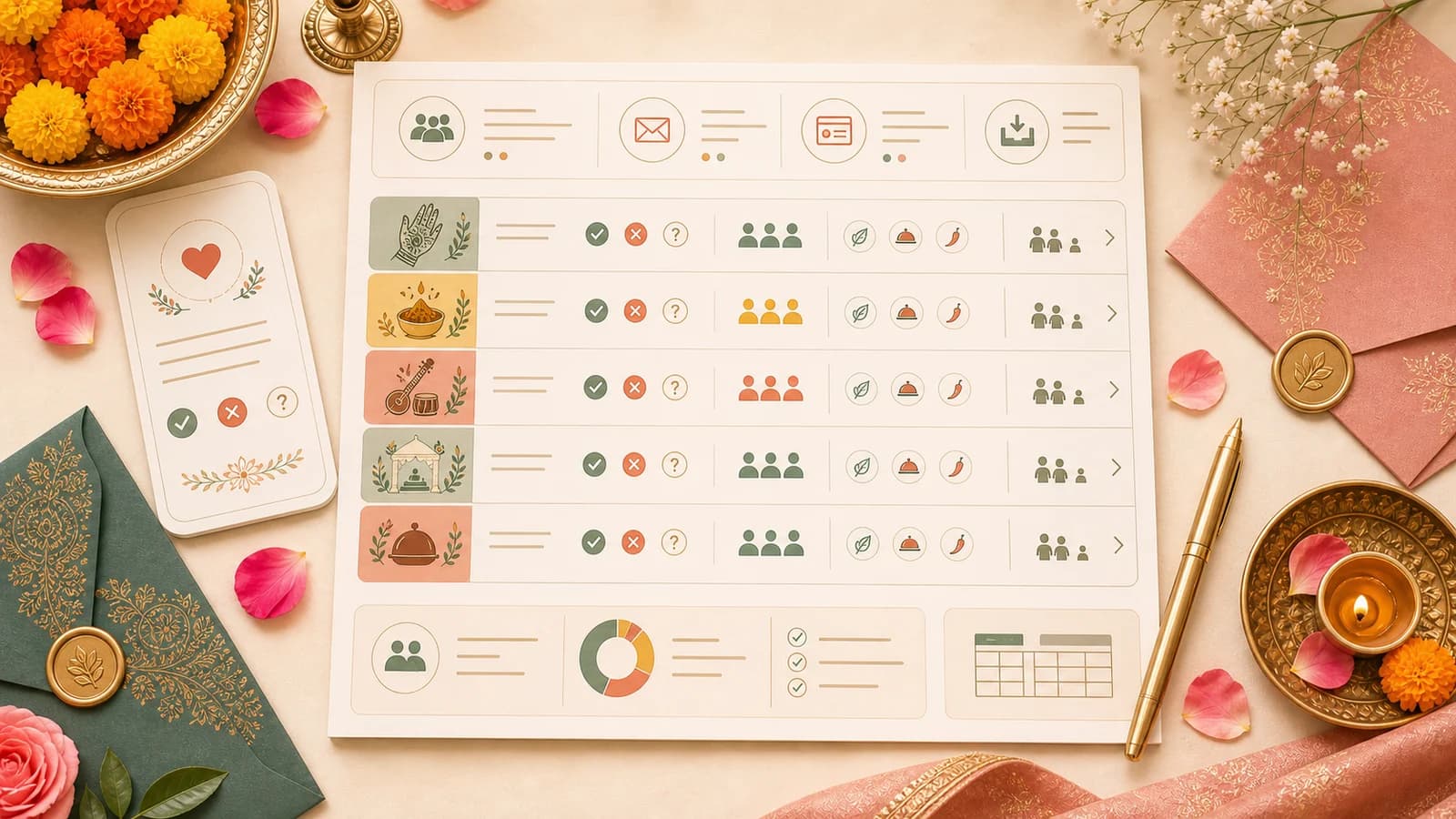
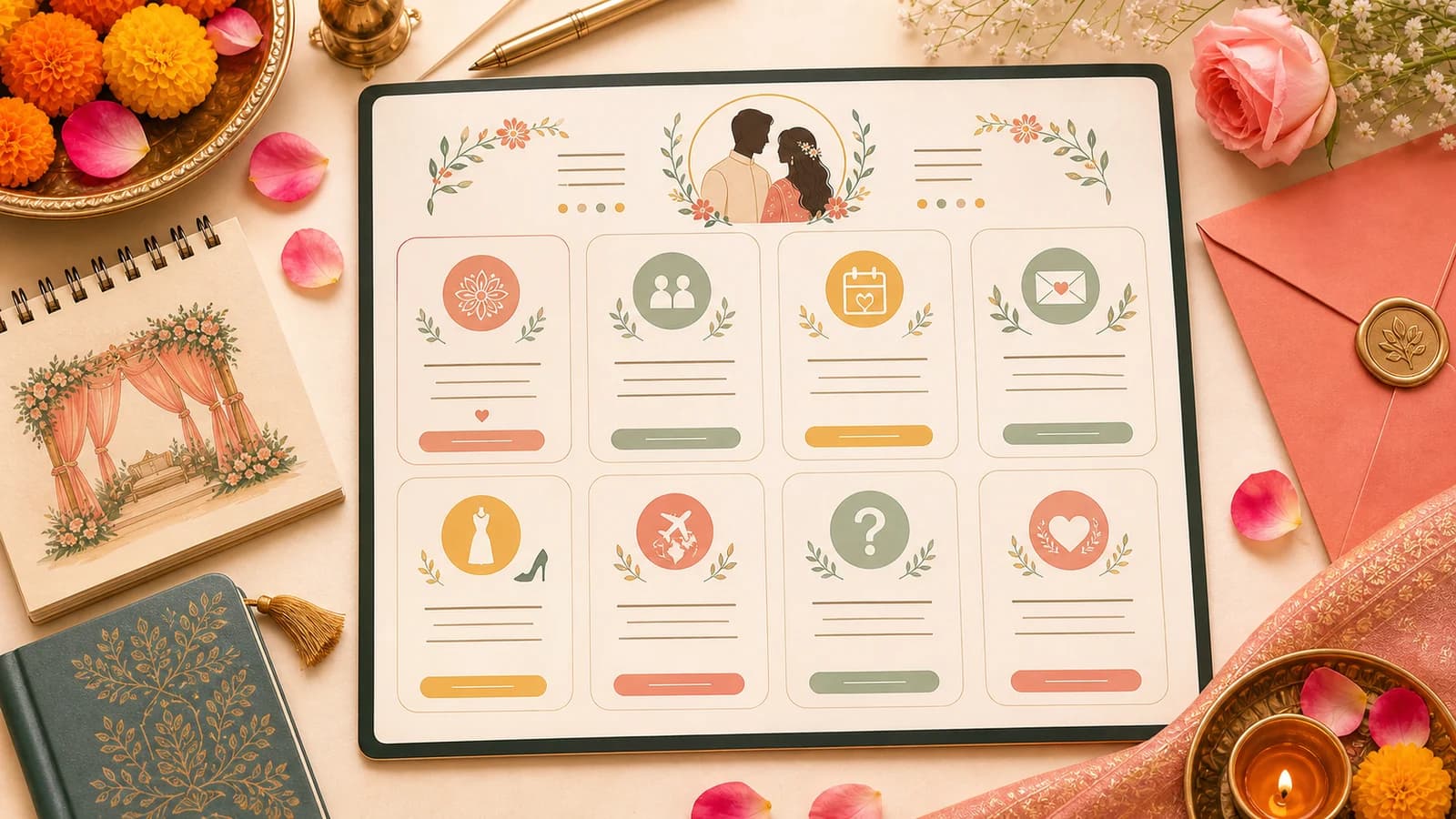
Wedding Website Templates for Hindu, Muslim, Sikh, Christian and Jain Weddings
A guide to choosing culturally aware Indian wedding website templates for different communities, ceremonies, event structures, RSVP needs, and guest expectations.
Quick answer
What this guide helps with
- Choose a wedding website template that fits your ceremony and family context.
- Understand how Hindu, Muslim, Sikh, Christian, and Jain wedding websites may differ.
- Avoid using a generic template that ignores cultural details guests expect.
Wedding website template
A wedding website template is a pre-designed layout for your public wedding site, including sections, colors, typography, image placement, event cards, RSVP, and guest information blocks.
Key takeaways
- Cultural fit matters as much as visual polish.
- Templates should support multi-event schedules, not just one ceremony.
- A good template lets you customize details without rebuilding the whole site.
Why generic templates fall short
Many wedding website templates are built around one ceremony, one reception, and one aesthetic mood. Indian weddings often need more.
- Multiple functions across different days.
- Religion or community-specific ceremony names.
- Different dress notes and guest expectations by event.
- Family-first language and blessings.
- WhatsApp and QR sharing for quick distribution.
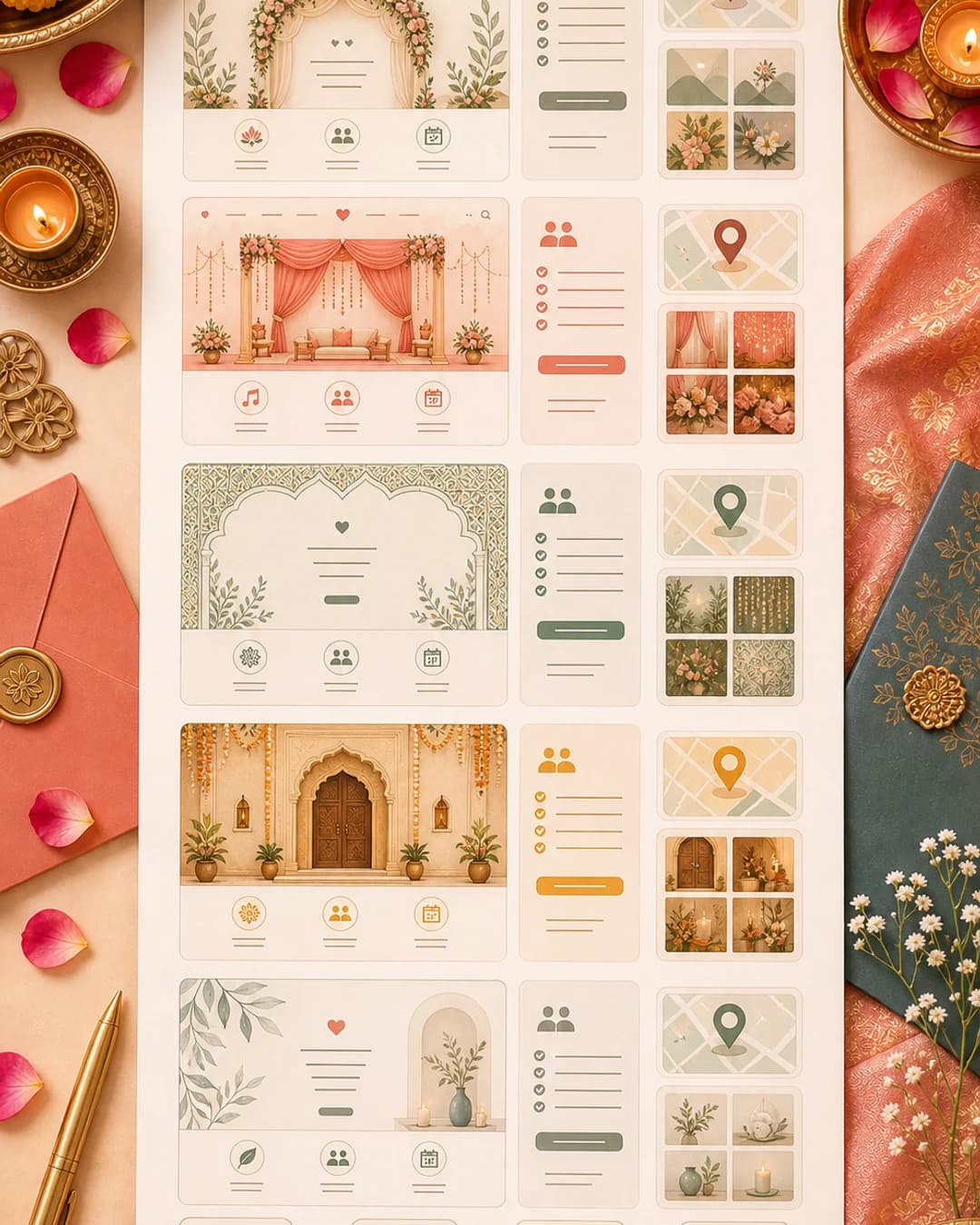
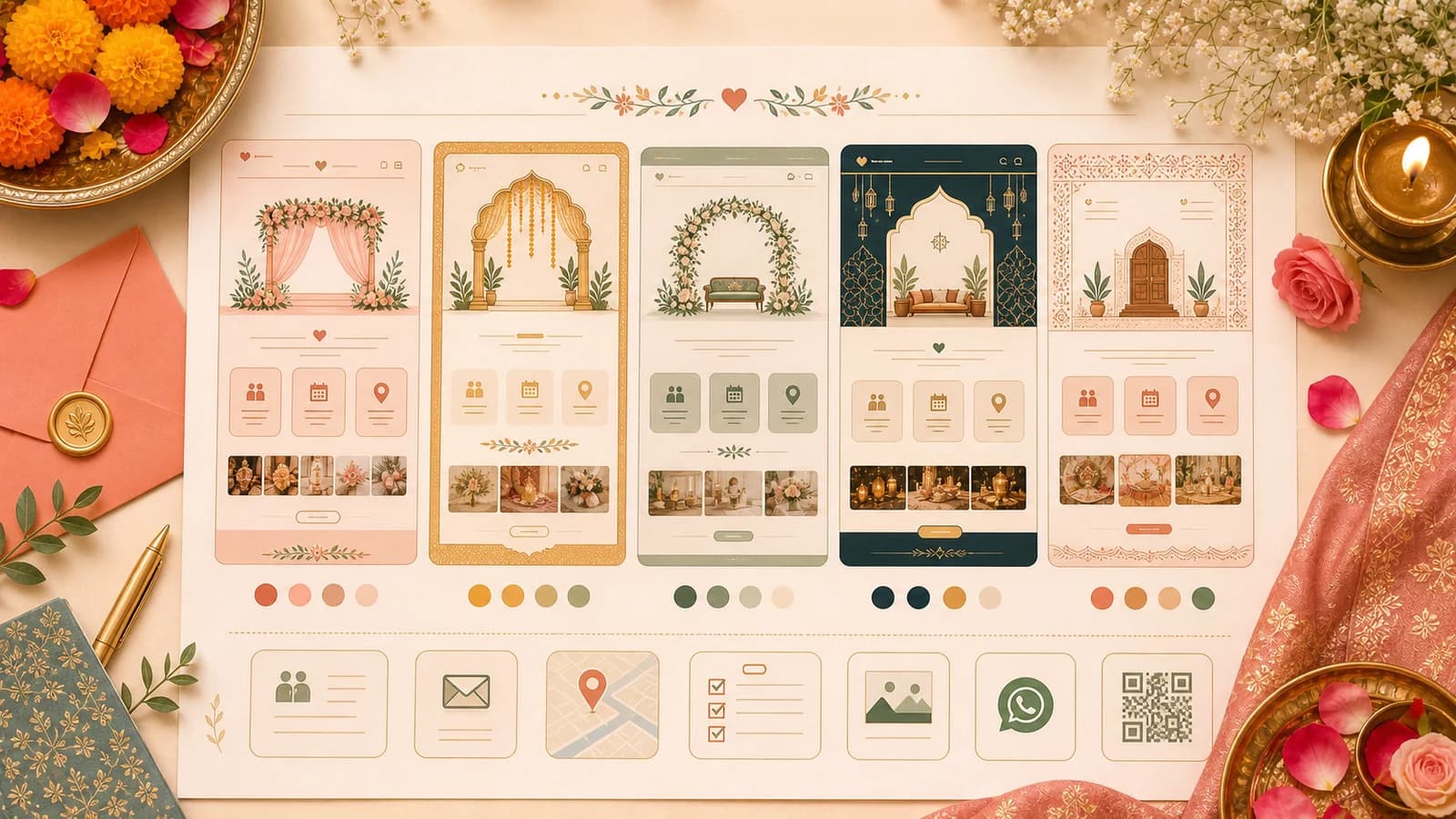
What this visual is showing
Different wedding contexts call for different visual and content decisions. The template should help guests understand the celebration while still feeling elegant, respectful, and easy to use.
The goal is not to stereotype every community. It is to give couples a better starting point than a generic Western wedding layout with only names and a date changed.
Template directions by wedding context
What to check before choosing
- Does the template support all your functions?
- Can event names be edited easily?
- Does RSVP work per event?
- Will the page look good on WhatsApp and mobile?
- Can you adjust colors and photos without breaking the layout?
Visual style should support clarity
Traditional
Modern
Balanced
Best default choice
If you are unsure, choose a balanced template: warm cultural details, clean event cards, clear RSVP, and enough spacing for mobile reading.
Common template mistakes
Common mistakes
Choosing only by the hero image
The rest of the page may not handle events, RSVP, travel, and FAQ well.
Using a one-event template for a multi-day wedding
Guests cannot quickly understand which function happens when.
Overdecorating every section
The page becomes harder to scan, especially on mobile.
A good template should do four jobs
- Introduce the couple beautifully.
- Explain every function clearly.
- Collect RSVP without confusion.
- Share easily through WhatsApp, QR, and one reliable link.
When to use the tool
How should I choose wedding website templates India families will understand?
Choose wedding website templates India families can scan easily, with clear event cards, RSVP, venue maps, WhatsApp sharing, and enough cultural flexibility for your ceremony style.
What should a Hindu wedding website template include?
A Hindu wedding website template should support function cards for Haldi, Mehendi, Sangeet, Pheras, and reception, with space for dress notes, maps, RSVP, and family guidance.
Can one design work as a Muslim wedding website template or Sikh wedding website template?
One flexible design can work when event names, colors, motifs, RSVP settings, and ceremony sections are editable enough to match nikah, walima, Anand Karaj, reception, or other family plans.
Choose a template made for Indian weddings