AI in Indian Wedding Planning: Useful Ideas and Limits
Explore how AI could help organize Indian wedding plans, guest messages and schedules, plus the human checks and privacy safeguards couples need.
Quick answer
What this guide helps with
- Explore responsible ways AI could support Indian wedding planning.
- Separate useful assistance from decisions that need human confirmation.
- Understand what a trustworthy AI wedding-planning product should protect.
Key takeaways
- AI can help organize and draft; it should not confirm bookings or cultural requirements on its own.
- Any future planner should make its suggestions editable and show what information it used.
- Guest and family data need clear consent, access controls and retention choices.
Where an AI wedding planning assistant could help
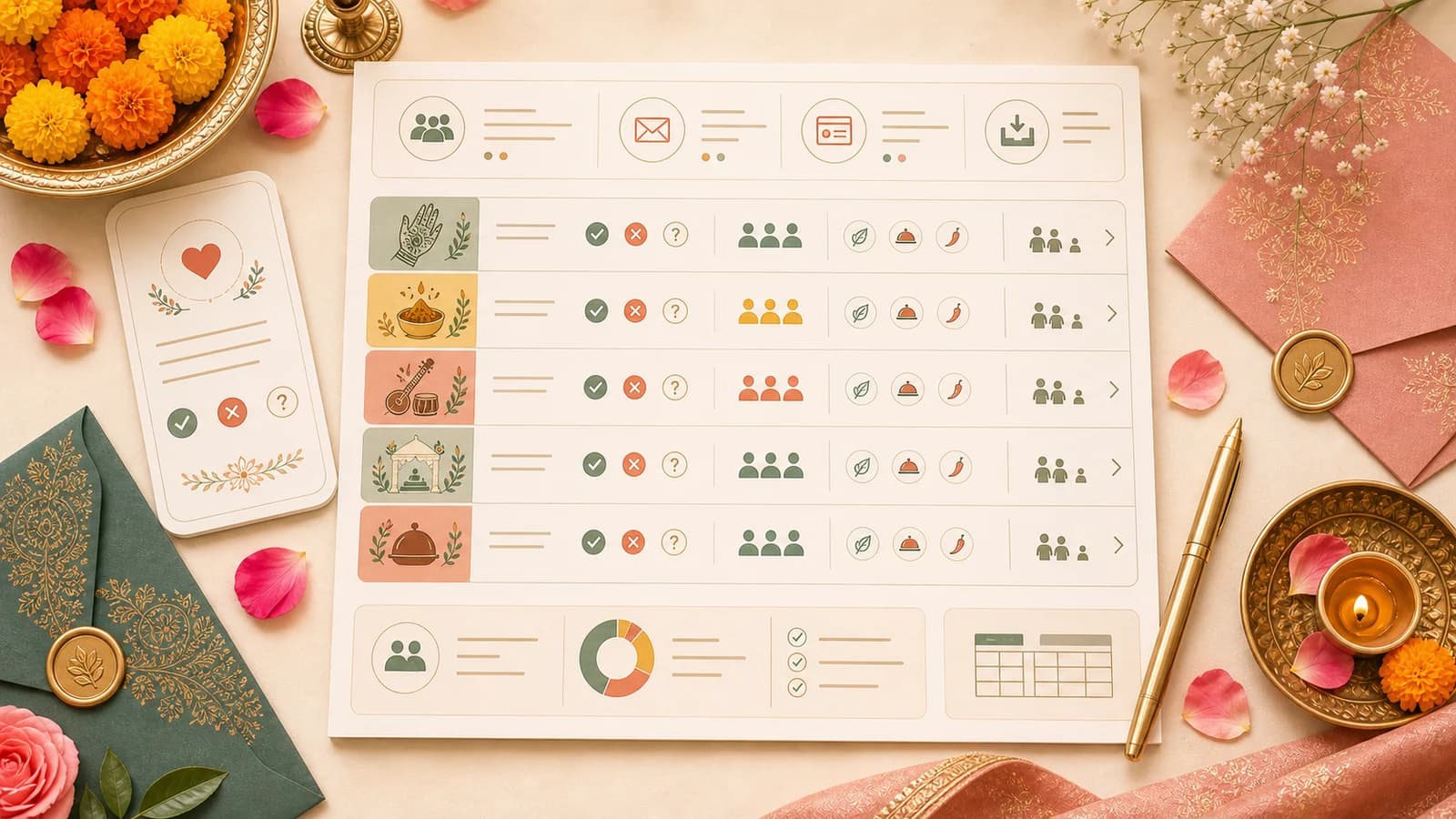
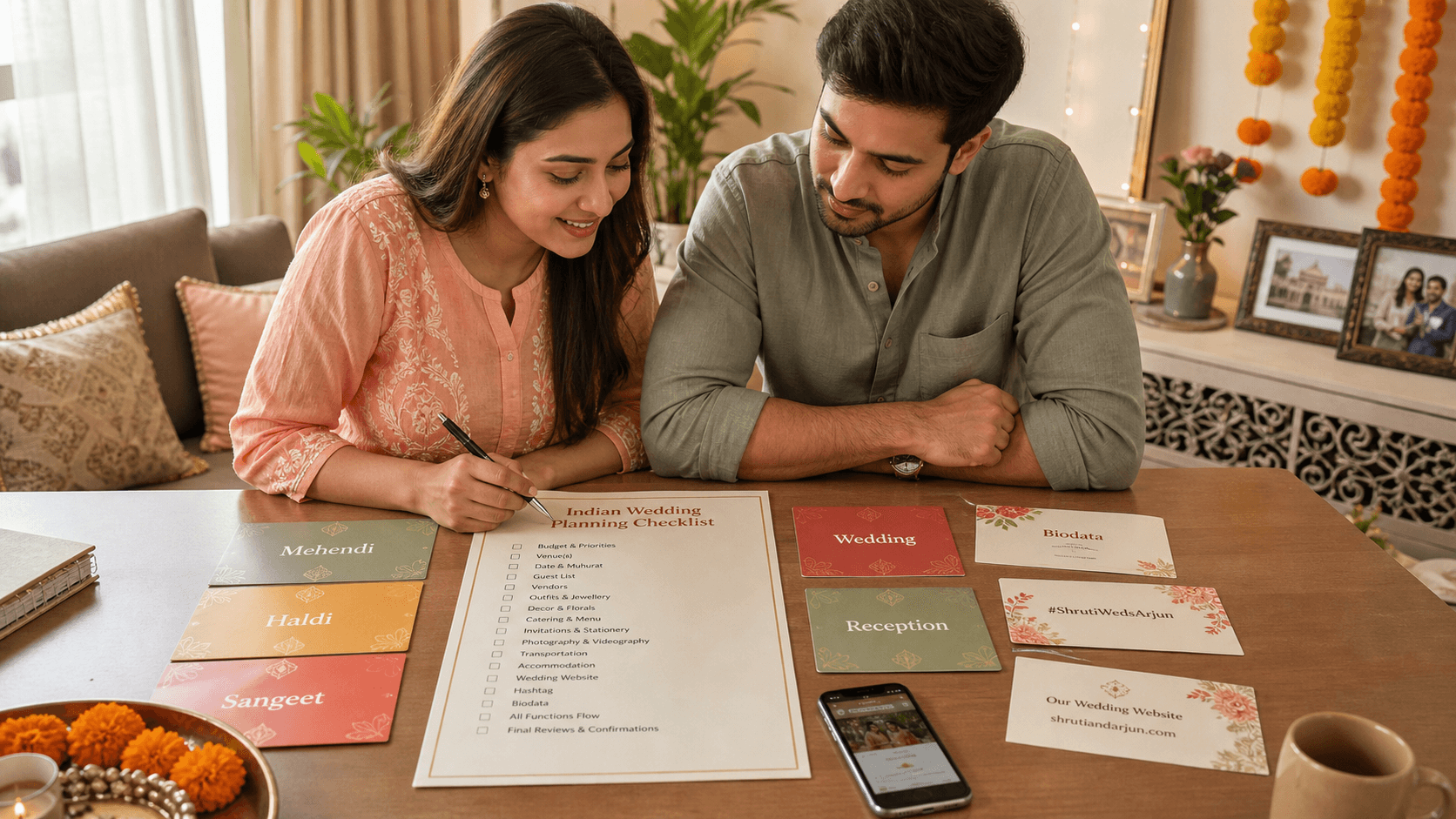
Indian weddings can involve several events, guest groups, vendors and family coordinators. A future assistant could reduce repetitive admin by organizing information couples already confirmed. That is a product direction, not a claim about functionality currently available on VivahVerse.
| Possible assistance | What AI might prepare | What a person must verify |
|---|---|---|
| Event checklist | A task list based on event dates and the couple’s priorities | Deadlines, owners and vendor commitments |
| Guest communication | Draft reminders or event updates | Names, language, audience and final sending approval |
| Schedule planning | A draft run-of-show across functions | Venue access, travel buffers and ceremony timing |
| Guest list organization | Suggestions for grouping or missing logistics | Consent, family relationships, dietary and accessibility details |
| Vendor comparison | A structured summary of information supplied by the couple | Current prices, availability, contracts and references |
| Personal recommendations | Ideas for outfits, music or photo moments | Budget, comfort, family context and the couple’s taste |
These are examples of what a carefully designed wedding-planning tool could explore. They should not be presented as live features unless the product actually ships them.
Human review is part of the workflow
A model can make a plausible mistake. It might misread a date, invent a venue rule, suggest an unavailable supplier or flatten a family custom into a generic recommendation. For high-impact details, the product should point to the source information, mark uncertain suggestions and ask the couple to confirm before anything is shared or acted on.
Religious and regional traditions vary between families and individuals. A useful assistant should ask what the couple wants, offer editable choices and avoid treating a community label as a full description of someone’s practices. The same applies to guest messages: an AI draft should never be sent automatically without clear approval.
Privacy and control belong in the design
Wedding plans can include phone numbers, addresses, guest relationships, travel details, budgets and personal preferences. A trustworthy tool should explain what it collects, why it needs each field, who can see it, how long it is retained and how users can delete it. It should avoid sending sensitive information to an AI provider unless that processing is clearly disclosed and necessary.
Couples should be able to edit, export or discard suggestions. They should know when text or recommendations were generated by AI, and a human should remain responsible for final decisions, approvals and messages.
A possible direction for VivahVerse
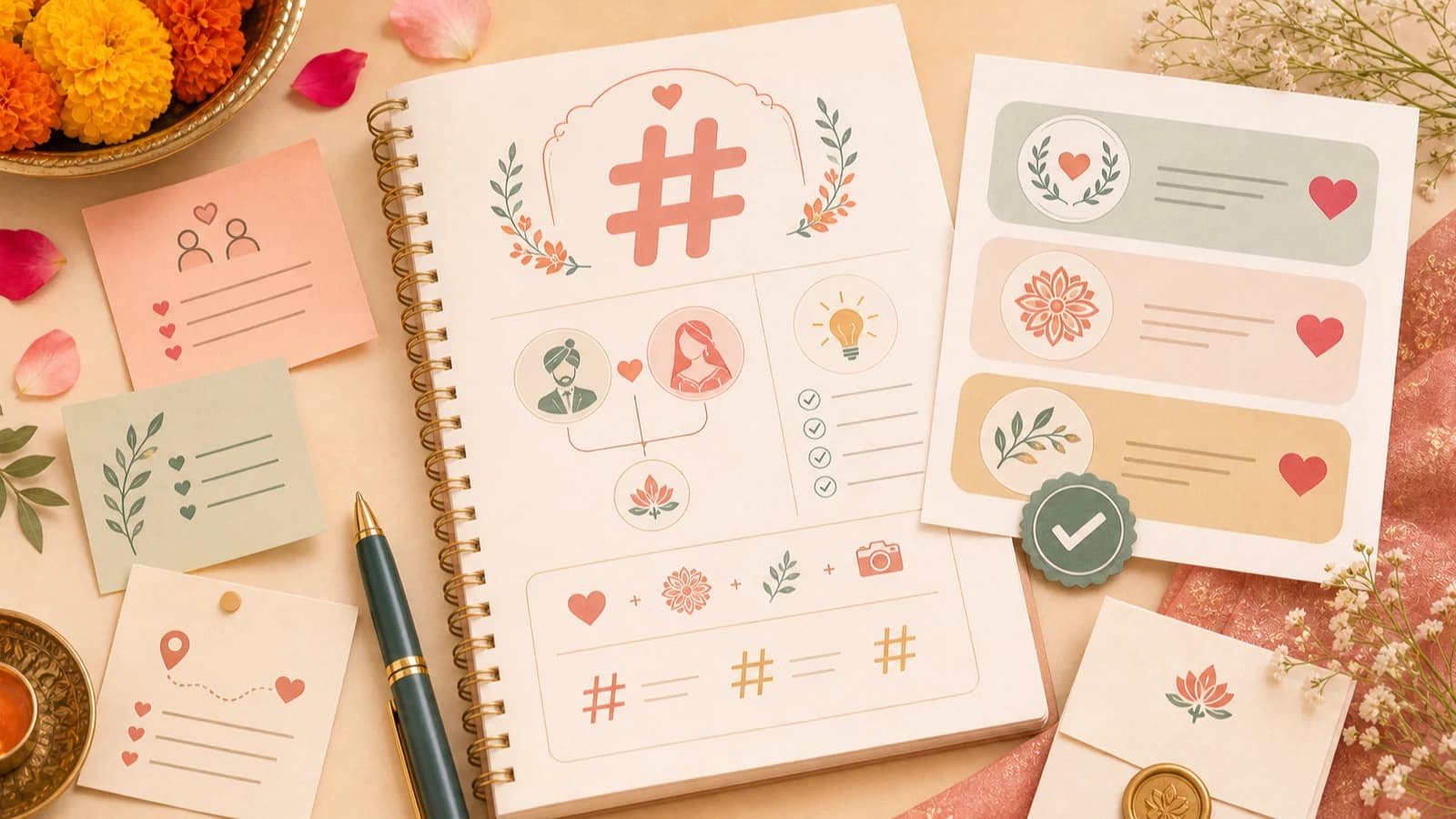
VivahVerse already has an AI-powered wedding hashtag generator. A broader AI-first wedding platform could build from that kind of focused, reviewable assistance: first help with small creative tasks, then consider connected planning support only when consent, accuracy and product controls are ready. Future possibilities might include event checklists, guest-message drafts and schedule suggestions; they are not promises or live features today.
The principle is simple: let AI handle a first draft or organize information, then keep the couple in control of what becomes a plan, a commitment or a message. Read how our current AI hashtag workflow works for a concrete example.
Can AI plan an Indian wedding by itself?
No. It can help organize or draft, but people must confirm dates, venue rules, contracts, budgets, cultural choices and messages.
Does VivahVerse currently offer AI guest-list suggestions or planning reminders?
No. Those are possible future product directions discussed here, not current live features. The current AI product covered in this series is the wedding hashtag generator.
What should couples check before using an AI wedding tool?
Review what data it collects and shares, whether suggestions are editable, how errors are handled, whether people approve outgoing messages and how sensitive details can be deleted.
See AI in a focused wedding task